

A business without a plan, a dish without a recipe - Are they possible?
This is quite similar to a link building checklist for SEO success. For link building success, you need a roadmap. This is what a link building checklist offers you.
You need a link building checklist for a few good reasons. It helps with structure and organization, making SEO and link building easier to handle. This checklist keeps your strategy organized and complete.
Additionally, it facilitates time management. Having a list of tasks prepared will help you manage your time better, especially if you are handling multiple SEO projects.
It also boosts your efficiency and consistency. By following the same steps each time, your link-building approach becomes more effective and reliable.
Moreover, a checklist helps you track and measure your link building progress. It lets you see what's working well and what needs improvement.
This article will share a link building checklist.
We Have Segregated It Into Four Categories:
- Checking your foundation.
- How to look for the most apt backlink opportunity.
- Producing quality content that attracts links.
- How to assess the quality of links you attracted.
So, let’s start.
Self Analysis
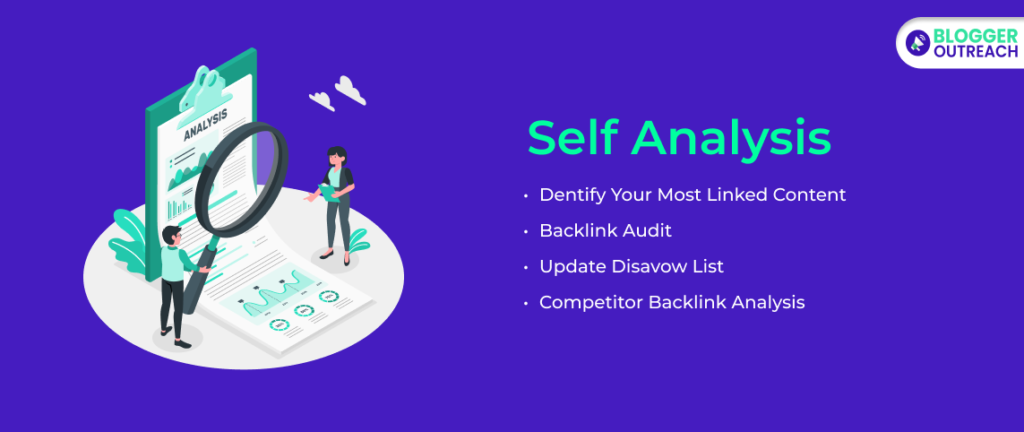
An in-depth analysis of your site ensures that you have a strong and optimized foundation before you begin seeking backlink opportunities. Here is how to do it the right way:
1. Identify Your Most Linked Content
Figure out your highly linked content for websites, discovering pages with numerous links is beneficial for two reasons:
- It reveals the type of content to create to generate more links.
- It identifies content suitable for future linkable asset campaigns.
Locating your most linked content is easy. Visit Google Search Console to identify pages with the most links, along with the domains linking to each page.
Alternatively, you can employ SEO tools like Ahrefs or SEMRush for insights into your most linked-to content and the specific linking pages.
Search your website in one of these tools, then select the option to view pages with the most backlinks.
2. Backlink Audit
A comprehensive list of your website's backlinks can be exported from Google Search Console to start a thorough backlink audit. In the next step, you will manually review these websites. You should identify irrelevant and low-quality sites during this review. Disavow these links as soon as possible.
3. Update Disavow List
Regularly reviewing and updating your disavow file is a good idea. A quarterly review is recommended. Periodic checks allow you to refine your list. In addition to removing previously disavowed sites, you can add new sites you identified as problematic. Maintaining your backlink profile will ensure that it remains healthy and clean.
4. Competitor Backlink Analysis
A competitor backlink analysis should be performed on a quarterly basis. Analyze this data thoroughly to identify valuable backlink sources. Make a list of websites that may also benefit your clients based on this analysis. You can improve your backlink profile and overall SEO strategy by emulating successful competitors.
Find Backlinking Opportunities

Let’s come to the crucial aspect of this link building checklist. Which is…
…identifying the backlink opportunities.
Distinct steps will help you efficiently locate and leverage various backlink opportunities. Hence, it will enhance your website's SEO and online presence.
1. Utilize SEO Tools
Start by using an SEO tool such as Ahrefs and Semrush. This tool can help you identify websites that may be willing to link to your site. It offers insights into potential backlink sources.
2. Analyze Competitor Links
Study your competitors' content and see which websites are linking to their content. This information can be a goldmine for identifying backlink opportunities.
3. Reclaim Broken Competitor Links
If you come across broken links leading to your competitors' websites, you can offer to replace those broken links with your updated and relevant content. This way, you can gain valuable backlinks.
4. Seek Unlinked Brand Mentions
Keep an eye out for any mentions of your brand online that aren't linked to your website. Reach out to the authors or webmasters and kindly request that they link to your site where your brand is mentioned.
5. Compile Guest Posting Sites
Create a list of websites in your niche that accept guest posts. Then, pitch your high-quality content to them, aiming to secure backlinks in return for your contributions.
6. Identify Relevant Directories
Discover directories that are relevant to your industry. Ensure that your website is listed in these directories, as they can provide citations and valuable backlinks.
7. Consider Affiliate Marketing
Think about launching an affiliate marketing program. Affiliates who promote your products or services often include links to your site, creating additional backlink opportunities.
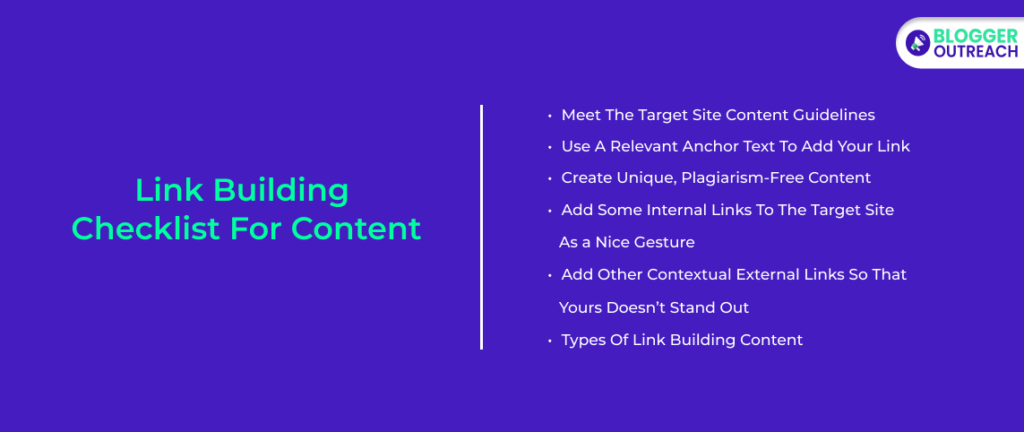
Link Building Checklist For Content
First thing first! When creating content for link building, it's crucial to choose topics that are relevant to your website's niche. This ensures that the content resonates with the target audience and aligns with the hosting site's theme.
1. Meet The Target Site Content Guidelines
Every website may have specific content guidelines or requirements. It's essential to understand thoroughly and adhere to these guidelines to increase the chances of your content being accepted for publication.
2. Use A Relevant Anchor Text To Add Your Link
The anchor text, the visible, clickable text in a hyperlink, should be relevant to the linked page's content. This helps both users and search engines understand the context and relevance of the link.
3. Create Unique, Plagiarism-Free Content
Originality is key. Plagiarism can harm your SEO efforts and reputation. Craft content that offers a fresh perspective or new information on the chosen topic.
4. Add Some Internal Links To The Target Site As A Nice Gesture
Including internal links to other relevant pages on the hosting site not only enhances the user's experience but also shows your willingness to contribute positively to their website.
5. Add Other Contextual External Links So That Yours Doesn’t Stand Out
Incorporating external links to authoritative sources within your content makes your link placement appear more natural and less self-promotional. It also provides value to the reader.
Place the link towards the top of the content and not the bottom. Positioning your link closer to the top of the content ensures it is more visible and gets better attention from both readers and search engines.
6. Types Of Link Building Content
- Articles For Guest Posting: Write well-researched, informative articles related to your niche and contribute them to relevant websites as guest posts. These articles should offer value to the hosting site's audience and include a link back to your website.
- Infographics That Can Be Distributed To Multiple Sites: Infographics are visually appealing and shareable. Creating and distributing infographics can attract backlinks, as other websites use them to illustrate their content.
- Research Studies That Many Sites Would Want To Cite: Conduct original research on topics of interest to your audience. Publish the findings in a way that encourages other websites to reference or cite your study, creating valuable backlinks.
- Quora Answers To Industry-Related Questions: Participate in Q&A platforms like Quora and provide informative, expert-level answers to questions in your industry. Include relevant links to your content or website when appropriate.
- HARO Answers And Expert Quotes For Roundups: Respond to queries on platforms like Help a Reporter Out (HARO) and provide expert insights or quotes. These often get included in roundup articles, giving you the opportunity to secure backlinks.
Link Building Checklist For Negotiating With The Publisher
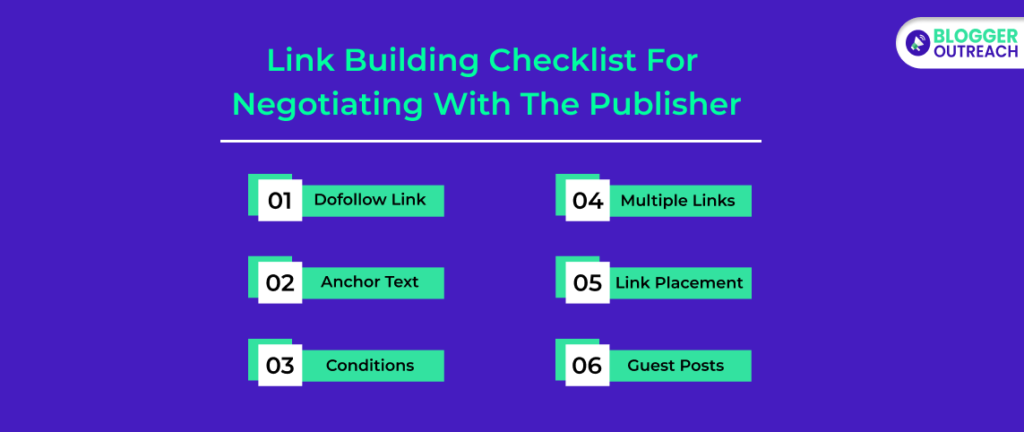
Follow this link negotiation checklist and improve your chances of securing valuables.
You should conduct the negotiations respectfully and professionally.
Here's what you should consider:
1. Dofollow Link
Make sure to discuss and secure a dofollow link to your website. Dofollow links are crucial as they pass on authority and help improve your site's SEO.
2. Anchor Text
Check if the anchor text used in the link is suitable and relevant to your content. It's important to ensure that it aligns with your target keywords and the context of the link.
3. Conditions
Be satisfied with the conditions set by the website owner. This includes any requirements or guidelines they have for the link placement. It's essential to respect their rules to maintain a positive relationship.
4. Multiple Links
Consider requesting multiple links if it makes sense for your content and the website's structure. Having more links can enhance the visibility and authority of your website.
5. Link Placement
Enquire about the ability to choose the page where your link will be located. This allows you to optimize the link's placement for maximum impact.
6. Guest Posts
If you're negotiating for a guest post, ask the publisher not to mark it as such. This can help prevent Google from ignoring the link. Instead, you can include a link in the article text to your writer's profile under your name.
Link Building Checklist For Checking The Quality Of Backlinks

For your website's SEO efforts to succeed, you must evaluate the quality of backlinks. To help you with this, here's a basic checklist for evaluating the quality of your backlinks:
1. Prioritize Dofollow Links Over Nofollow Links
A dofollow link passes link juice and is valuable for SEO. In contrast, nofollow links do not contribute as much to the authority of your site.
2. Check For UGC Or Sponsored Tags
Ensure that the backlinks you're acquiring are not tagged as "UGC" (User-Generated Content) or "sponsored." Such tags can indicate that the links may not carry as much SEO weight.
3. Noindex Tags
Make sure the linking page does not have a "noindex" tag. If it does, search engines might not index that page, which can reduce the SEO value of the link.
4. Robots.txt Exclusion
Avoid backlinks from pages that are excluded by the "robots.txt" file. These pages are not crawled by search engines, and links from them may not have any SEO benefit.
5. Choose Popular Pages
Prefer backlinks from popular pages that receive a significant number of incoming links. Such pages are more likely to enhance your site's authority and visibility.
6. Limit External Links
Check that the page linking to you does not have too many external links. Pages with too many outbound links might dilute the value of your backlink, as the link equity is shared among many other links.
With these guidelines, your website's search engine optimization can be enhanced by building high-quality backlinks. Getting your site ranked higher in search engines requires maintaining the quality of your backlinks.
Well…It’s Time To Take Action!
How was the link building checklist? We hope that you have enough actionable tips to change your SEO reality. These tactics are proven and have helped our clients to get their desired results.
So, what are you waiting for? What’s holding you back?
Follow these steps and see your backlinks making noise in this digital realm.
If you like this article and want to read more helpful content on link building, visit our blog section.
Read Also: