

Google AI Overviews is now triggering about 48% of all tracked queries (a 58% year-on-yearincrease). As a result, it is even aggressively pushing the traditional organic results below the fold.
So, do you think this is an alarming statistic? Actually, it is. The days of traditional search, where you simply picked keywords, created content around them, generated backlinks, and waited for the content to get ranked.
While that playbook still exists, it is less relevant than before. Instead, Google now tries to understand businesses as entities: not just the website or phrases, but real-world things with names, attributes, relationships, histories, founders, products, locations, and proof. And this is where Google Knowledge Graph Optimization becomes necessary.
What Is A Google Knowledge Graph?
Google Knowledge Graph is Google’s large database of entities and relationships. The purpose of creating it is to help modern AI search engines understand that a company, person, product, place, book, organization, or concept is not just a string of words. Rather, they are legitimate things with context.
Now, when the search engine can easily understand the entities, it will be able to connect the term ‘Apple’ to a technology firm, the fruit, or the record label, depending on the query. Even if it sounds very basic, it has transformed how search works today.
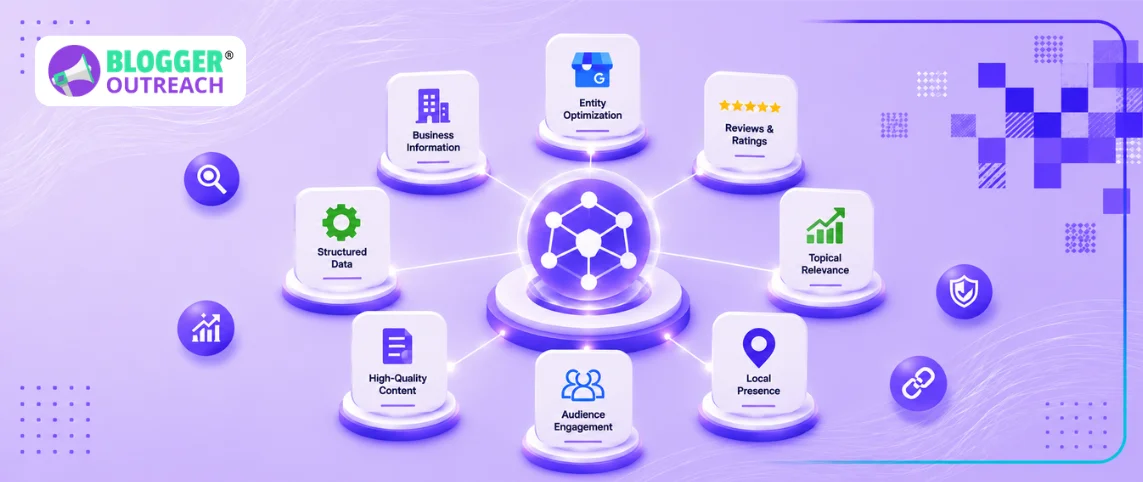
The question now is: what does it mean for SEO? Well, this means Google is no longer just crawling a website and indexing its pages. It is now evaluating whether a brand is clearly identifiable across the web, with the website, social profiles, directory listings, media mentions, structured data, reviews, author bios, product pages, and third-party references all contributing to the picture.
Now, if every platform returns the same signal and there are no discrepancies, it makes the entity easier to understand. But in cases of any clashes, Google will hesitate, which can be expensive.
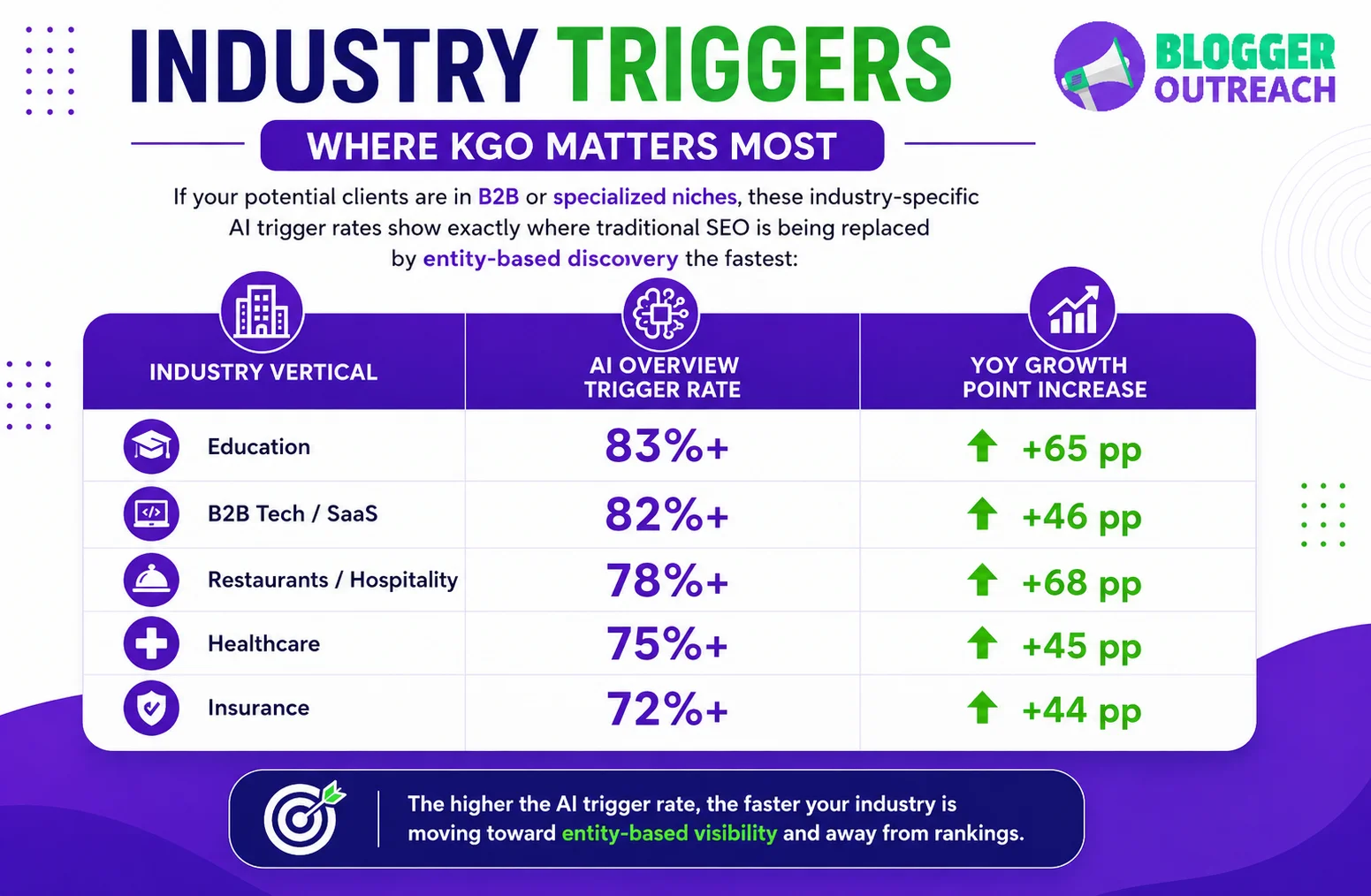
How Does Google's Knowledge Graph Work?
The Google Knowledge Graph works by collecting, reconciling, and connecting information from many sources. It scans for entity names, descriptions, categories, relationships, and trusted references, then compares those signals to find connections. For instance, a company might be connected to its founder, headquarters, products, industry, social profiles, and official website.
This is one of the major reasons why entity SEO has become so important in 2026. Where traditional SEO always asked, ‘What keyword should be targeted for this page?’, the entity-focused SEO ask, ‘Does Google understand who this business is, what it does, and why it should be trusted?’ and this is where the difference lies.
| What Is The Difference Between Writing Standard Schema Markup And Building An Actual Website Knowledge Graph? Standard schema markup labels key facts for search engines. A website knowledge graph goes further. It connects entities, pages, people, products, services, topics, and external references into a structured relationship network. Schema is the vocabulary. A knowledge graph is the connected meaning system behind the site. |
Google Features Powered By Google Knowledge Graph
The Knowledge Graph influences several search features that shape trust before a user even lands on a website. Some are obvious. Others sit quietly in the background. Still, they affect how users interpret a brand.
| Google Feature | How it Relates to Entities | Why Businesses Should Care |
| Knowledge panel | Displays summarized entity information for brands, people, or organizations | Builds trust and improves branded search presence |
| Rich results | Uses structured data to improve listing with extra details | Can improve visibility and click confidence |
| Related searches | Connects people, topics, products, and organizations | Reveals how Google associates your business |
| AI-generated answers | May reference or summarize entity information from trusted sources | Makes entity accuracy more important |
| Local packs | Connects business name, category, location, reviews, and website | Critical for local discover and reputation |
Now, these features do not get activated by a single trigger. For instance, even though these triggers will overlap, a Google Knowledge Panel is not the same as a rich result; similarly, a rich result is not the same as a brand entity.
However, the clearer the brand entity, the easier it is for Google to display the information accurately.
Why Google Knowledge Graph Optimization is Critical For Businesses?
Traditionally, businesses think about search visibility in terms of ranking. It is visible, measurable, and easy to explain in a report. However, the entity visibility is different. It sits beneath ranking and affects how Google understands your brand, how your brand information appears, and whether your business can appear confidently in AI-assisted search experiences.
| Did you know? Nearly 60% of searches today end without a single click. |
That is precisely why Google Knowledge Graph optimization becomes critical, as it protects the meaning of your business. Now, even if it sounds a tad abstract, it is practical because if Google mixes up your old location, outdated logo, wrong founder name, duplicate business profile, or inconsistent category, everyone will notice. A messy entity footprint creates friction before the sales conversation even starts.
| Traditional SEO | Knowledge Graph Optimization |
| Focuses on keywords and pages | Prioritizes entities and relationships |
| Measures ranking and traffic | Tracks clarity, accuracy, and entity presence |
| Optimizes content for queries | Optimizes brand meaning across the web |
| Relies heavily on on-page signals and backlinks | Relies on structured data, citations, references, and consistency |
| Mostly page-first approach | Prefers an entity-first approach |
Now, this doesn’t imply that traditional SEO is now irrelevant. It just means that the foundation of SEO has widened. Today, an established corporation can publish high-quality content and still confuse Google if its entity signals are not consistent. On the other hand, a small business with clean, consistent, well-supported entity data can look more trustworthy than a larger competitor with sloppy digital records. Strategic guest posting services can further strengthen these entity signals by increasing brand mentions and authority across trusted websites.
The Core Components Of Google Knowledge Graph Optimization
Before venturing into the optimization process, it is critical to understand the core components of the Google Knowledge Graph. Even if they are regarded as repetitive and tedious, they are highly practical as they send necessary signals and help Google understand a business.
(i) Entity Home
The first component is the entity home, which refers to the main page that defines the business, which in most cases is the Home page or the About page. Either way, the page must mention the official brand name, business category, location, leadership, products, services, and key identifiers. The major issue faced here is that many such pages are vague, outdated, or filled with generic copy that says very little.
(ii) Schema Markup
Schema markup is another key element of this process. It gives search engines structured information about the business. It helps clarify whether the entity is an organization, a local business, a person, a product, a service, or a publisher. However, it has to match the content of the visible page, and if the schema says one thing and the page says another, it creates confusion instead of clarity.
(iii) SameAs Signals
SameAs signals connect the business website to its official profiles and trusted references. These may include LinkedIn, Crunchbase, Google Business Profile, social media pages, directory listings, or other verified brand profiles. The major issue reported here is inconsistency. One profile may use an old logo, another may show an outdated description, and another may link to the wrong page.
(iv) Third-party Mentions
In the AI-dominated search era, Google is not just trusting what the business says about itself. It is also looking for external evidence, including media mentions, partner pages, interviews, review platforms, industry directories, podcasts, credible articles, etc. However, these mentions should be from reputable sources for Google to value them.
(v) Relationship Mapping
The last component on this list is relationship mapping. Now, it is not possible to understand a business in isolation, which is why Google connects founders, executives, products, services, locations, subsidiaries, parent companies, and industry topics. These relationships help Google place entities within a larger network, and many businesses miss this entirely and suffer as a result.
Having mentioned these core components, it is also crucial to remember that the goal is not to flood Google with business information. Instead, it is important to ensure the right information repeats itself in the right places, with enough authority and consistency for Google to trust it.
| Can A Business Get Into The Google Knowledge Graph Without Having A Wikipedia Page? Yes, to get a Google Knowledge Graph, you don’t necessarily need a Wikipedia page. There is no doubt that having a Wikipedia page helps, but if you take care of other factors like consistency, accuracy, and citations from credible sources, you will automatically get the Google Knowledge Graph. |
How To Optimize For A Google Knowledge Panel?
You cannot force-create a Google Knowledge Panel; it is very important to understand that. The eligibility here entirely resides with Google. If the search engine thinks that an entity deserves that kind of display, then it will get it.
However, that doesn’t mean that business has no role to play. They can focus on strengthening the signals that make a Knowledge Panel more likely and more accurate when it appears. Here are the key ones:
- Establish A Clear Entity Home: The first step is to establish the entity home for your business. For that, choose a page that best defines your business. Usually, it is either the home page or the About page, but it must include the official name, description, founding details, leadership, services, location, and links to verified profiles.
- Add Organization Or Person Schema: Next, focus on adding schema markups that match what users can see on the page. For companies, ‘Organization’ or ‘LocalBusiness’ schema often fits, but for founders, consultants, or public experts, the ‘Person’ schema may be appropriate.
- Keep Descriptions Consistent Across The Web: Maintaining a consistent brand presence is important to get a Google Knowledge Panel. So you need to ensure that your brand is not mentioned as a SaaS company in one place, a digital agency in another, and a consulting platform somewhere else unless those distinctions are intentional and clearly explained.
- Build Authoritative Third-party References: Building authoritative third-party sources is also crucial here. The reason is that Google needs external confirmation, such as media mentions, interviews, podcasts, partner pages, reputable directories, industry associations, and review platforms, to establish legitimacy.
- Create Or Improve Wikidata Or Wikipedia Presence: Creating or improving the existing Wikipedia page also helps in Google Knowledge Graph Optimization. But if your brand doesn’t already have a Wikipedia page, creating one just for the sake of it isn't good practice. If the business is not notable enough, it may be removed, and that is not a good look.
- Strengthen Brand Search Demand: A brand that people search for, discuss, review, and reference sends stronger entity signals. Branded demand is not just a vanity metric but proof that helps build the Google entity.
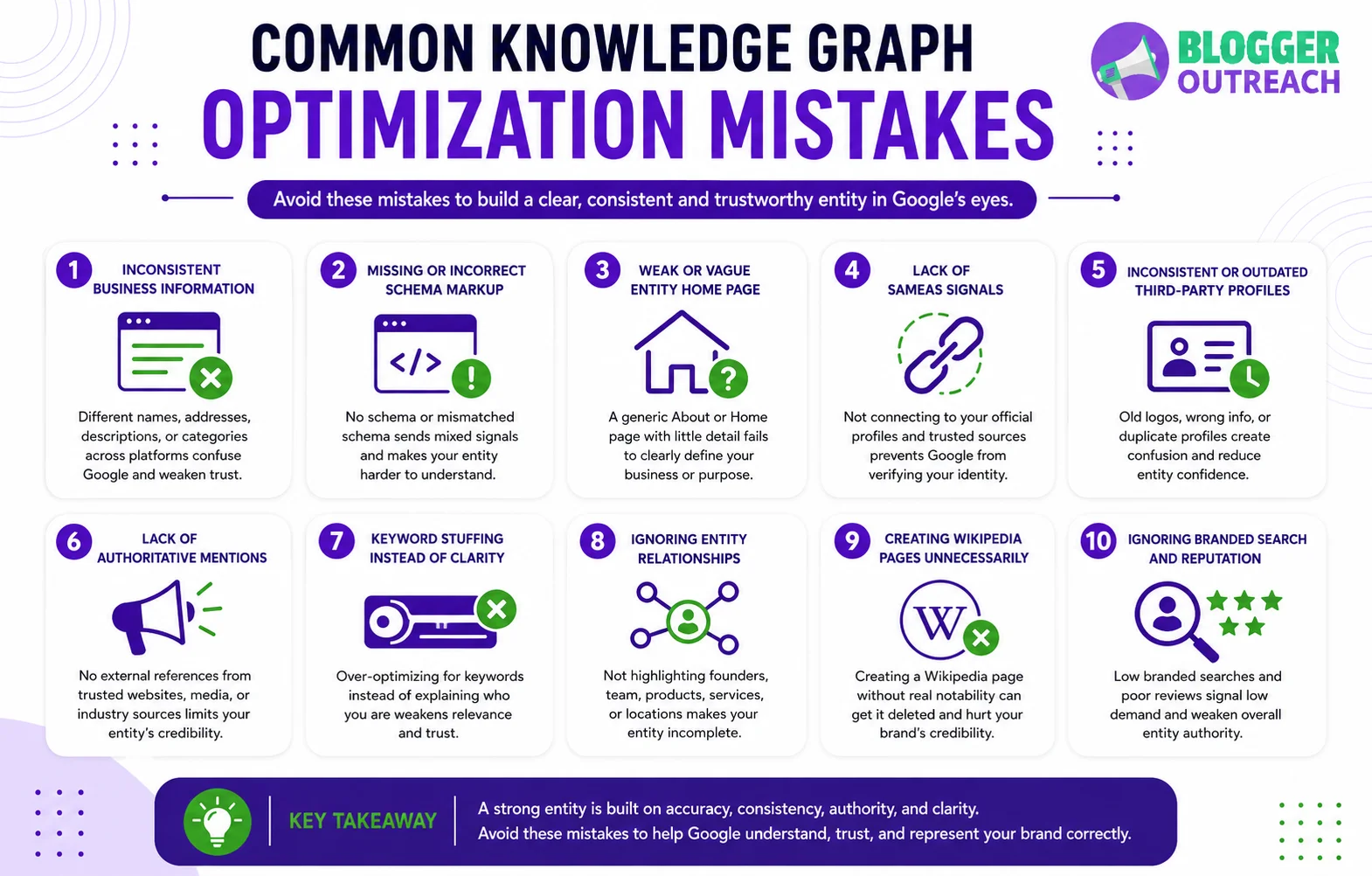
Stronger Entity Signals Create Stronger Search Trust
The Google Knowledge Graph optimization is not about chasing a new shiny feature. Rather, it is about making your business easier to understand, verify, and trust in a search environment that is becoming more entity-led and AI-assisted every month.
So, if you are also struggling to establish your brand authority beyond the website through external mentions, you need a thoughtful outreach strategy. Here, partners like Blogger Outreach help earn relevant publisher placements and visibility across trusted content environments, without turning the whole thing into a cheap link-building exercise.
If your brand needs cleaner authority signals and better off-site recognition, start building that footprint with Blogger Outreach today.
Frequently Asked Questions:
A: Not exactly. Entity SEO is broader and includes optimizing people, places, products, organizations, concepts, and topical relationships across search. Knowledge Graph optimization, on the other hand, focuses on helping Google and other knowledge databases understand, connect, and validate entities. Even though the two overlap a lot, they are not identical. So, think of entity SEO as the larger discipline, and Knowledge Graph work as one important layer within it.
A: No, schema markup can help Google understand your entity, but it does not guarantee securing a Google Knowledge Panel. Getting the panel usually depends on broader confidence signals, including entity consistency, third-party validation, branded demand, and trusted references. Schema proves useful here because it reduces ambiguity, but it is not a magic button, even though sometimes it is marketed that way.
A: It usually takes 1-2 weeks to months for the Google Knowledge Graph to be approved, but in some cases that timeline can extend. The final timeframe depends on how much authority the entity already has, how consistent the existing information is, and whether credible third-party sources validate the business. A well-known company with messy data may improve faster than a new brand with almost no external footprint.
A: Yes, especially if they rely on trust. Local businesses, consultants, SaaS companies, ecommerce brands, agencies, clinics, professional service firms, and niche B2B providers all benefit from clearer entity signals. A small business may not get a large Google Knowledge Panel quickly, but it can still improve how Google understands its name, category, location, services, and reputation.
A: The choice of the best schema depends on the business model. But some common options include Organization, LocalBusiness, Person, Product, Service, Article, and sameAs properties. The key, however, is accuracy. A local clinic should not use the generic Organization schema alone if LocalBusiness or MedicalBusiness markup fits better. A founder-led consultancy may need both the Organization and Person schemas, carefully connected.