

It seems like everyone is already tired of the whole “AI-search era” talk. There were so many speculations: “SEO is dead,” “We can’t influence AI visibility,” “People will stop googling,” “We’re all doomed…”
Well, as you can see, it doesn’t look like optimization will be dead any time soon. And while we still don’t fully understand where LLMs will bring us in terms of discoverability, there are some obvious shifts you have to be aware of.
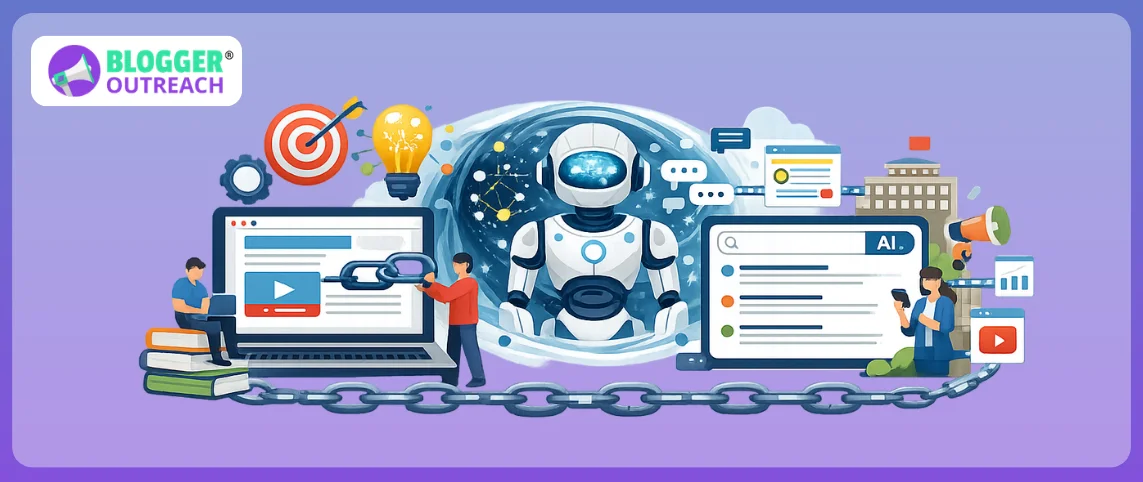
And today, we’ll cover everything about how link building works for AI search. What has changed, what stays the same, and what your current priorities should be to get better LLM visibility. So, if you haven’t been sure what your link building has to look like these days, this guide is for you.
How Link Building Works for AI Search, And Why It Matters More Than Ever?
To understand why link building matters for AI visibility, we first have to understand how LLMs choose their sources. These are some of the major elements:
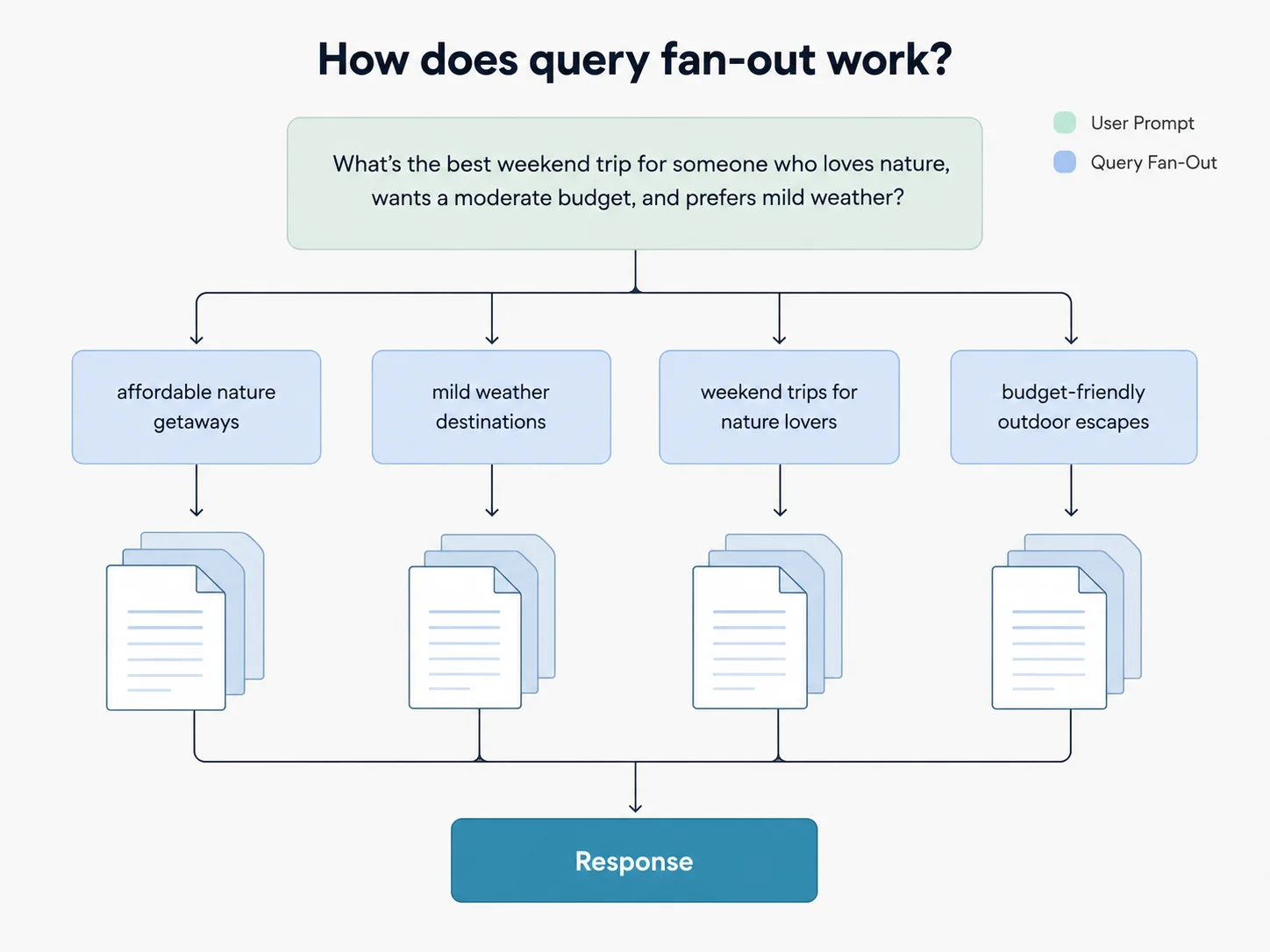
- Relevance And Depth: Traditional search engines also rely on relevance, so there is nothing new here. But when it comes to depth, AI systems tend to consider this more, partially because of the query fan-out. It’s an approach where, instead of looking for a direct answer to the question, AI searches for related queries. So, the deeper you cover your topic, the more chances you’ll generally have to get cited.
- Topical Authority And Brand Entity: Brand entity is how your business is perceived by AI systems and search engines. It includes all the information there is online about you. When it’s consistent and when you have a clear topical authority instead of covering 20 unrelated subjects, LLMs are more likely to cite you. Because they clearly associate your business with a particular niche.
- Clean And Easy-to-Extract Structure: AI systems are algorithms that don’t really perceive your content as humans do. They basically “scan” it, trying to find what they need. And if you want to make this task easier for them, create machine-readable content with clear headings, bullet points, lists, shorter paragraphs, etc.
- Fresh, Up-to-Date Content: This was always important for Google as well. But now, AI systems are even more focused on content freshness. So, regular updates are a very good practice.
- Overall Credibility And External Validation: This is one of the most important elements. AI systems will generally cite you when they can find some relevant and positive external mentions of your brand. So, it isn’t just about the content you post across your own channels. It’s about everything the internet has to say about you.
That’s why when you check the studies that look into AI citations, you discover some very surprising findings.
For example, only a third of the pages cited in AI Overviews rank in the top 10 for the same query. And remember that AIOs are Google’s product, and yet the algorithm seems to be different.
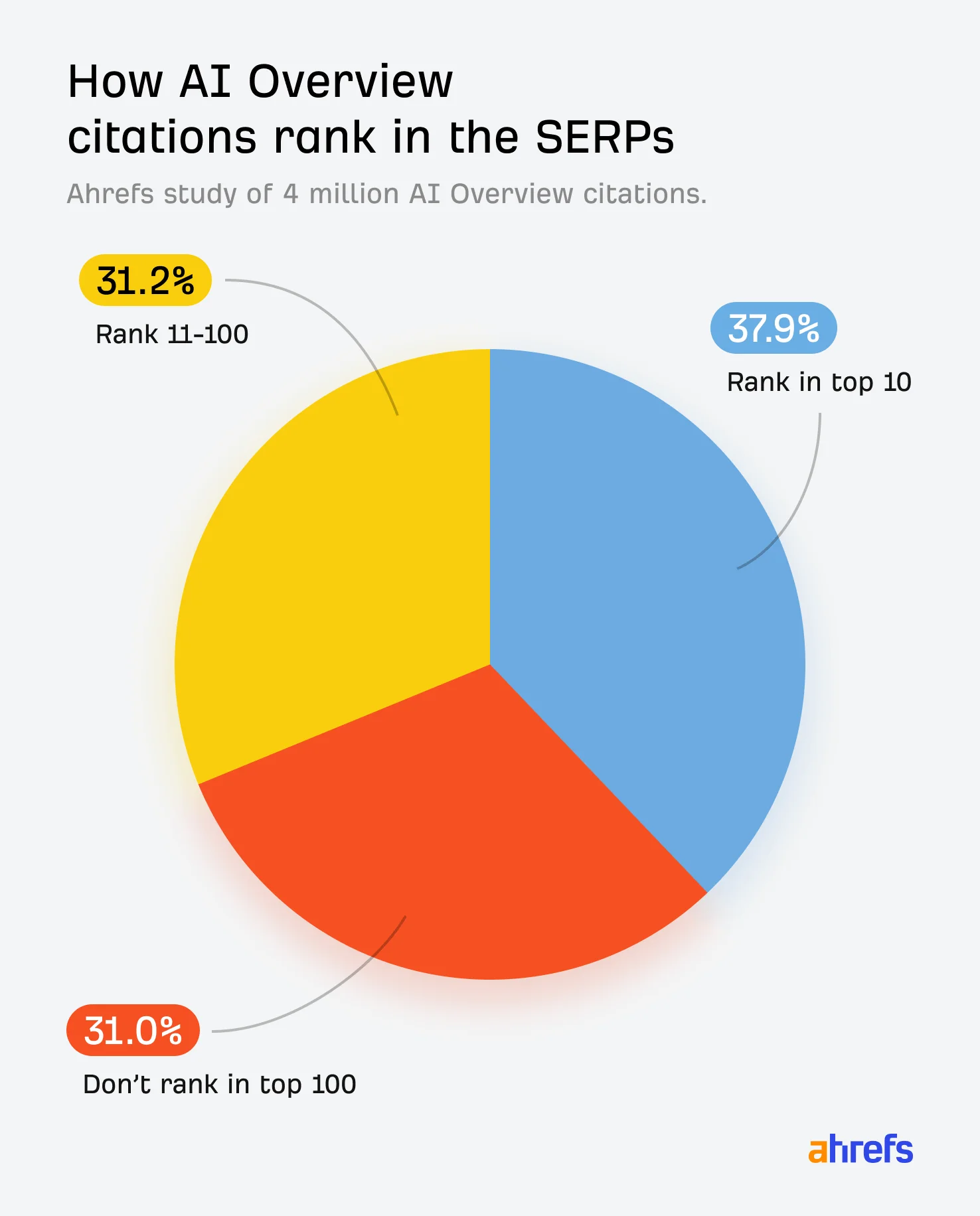
Source: Ahrefs
When you look into LLMs’ sources, the situation is even more mind-blowing. For example, 92% of sources that ChatGPT cites in its answers don’t rank in the top 10 search results.
And usually, what differentiates the pages that get mentioned by AI is their external exposure. They might only rank for branded keywords and yet get recommended by LLMs because of all the backlinks and other mentions across the web.
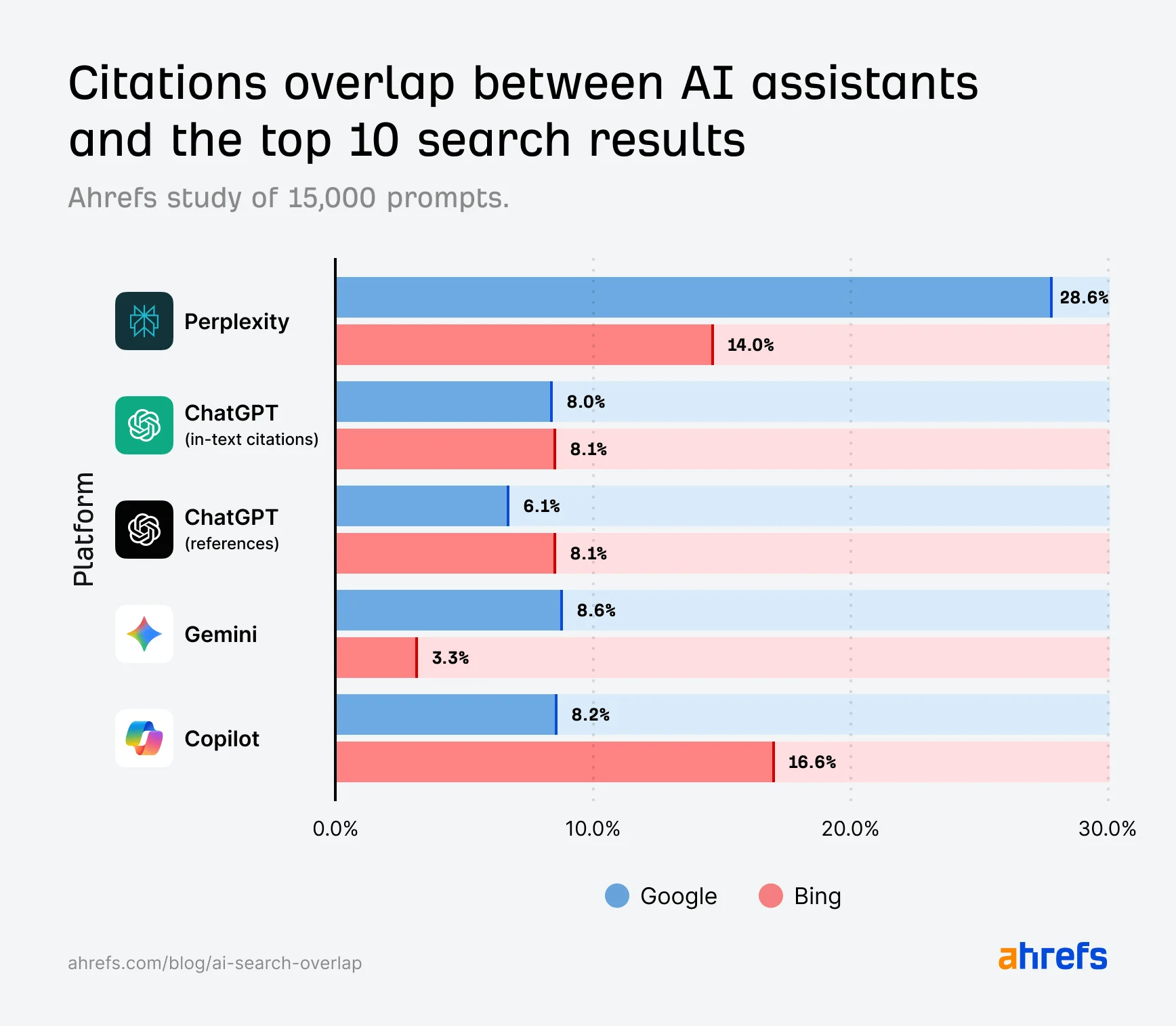
Source: Ahrefs
As generative engine optimization relies on slightly different aspects compared to traditional SEO, the AI shift turned out to be very different for every brand. Some had great rankings, but got very low visibility in LLMs. At the same time, others received numerous AI citations even though their rankings generally weren’t that high.
So, the AI SEO growth timeline will also look different for everyone. And that’s okay. It really depends on what you’ve been doing before and how flexible you are now.
It Goes Beyond Just Backlinks
AI systems read backlinks similarly to traditional search engines. But they also consider unlinked mentions much more seriously. So, it isn’t just about your typical links anymore. Now, your focus should shift to a broader strategy when it comes to all the external visibility.
So, for example, even when you get some unlinked mentions on Reddit, AI systems can read that to create a better picture of your brand. And if they find several sources where people recommend your business as a solution in a particular niche, your LLM visibility can grow exponentially.
That’s Why You Want To Get More Coverage, Including:
- Actually relevant backlinks from websites that are highly connected to your industry,
- Brand mentions everywhere: on forums, social media, in videos and podcasts, etc.,
- Quotes and comments from your team, founder, etc. (for example, an expert roundup where one of your team members shares some insights),
- Mentions in some relevant comparisons or listicles,
- Reviews on listing platforms or standalone review articles,
- Press releases that strengthen your brand entity even more (now it doesn’t matter as much that most of those links are nofollow).
How To Use Link Building For AI Search Optimization?
Now, let’s go practical. How should you actually approach link building to gain more digital authority signals and improve your AI discoverability?
1. Focus On Credible Resources Even More
If you read any guide on link building for traditional search engines, you’ll see this same advice: find only relevant and high-quality pages. But frankly, you could still get away with pretty average backlinks.
Now, the situation is slightly different. AI search optimization is largely about “associations.” So, if you want a backlink to work better for your AI visibility, the link donor should be highly relevant to your topic. That’s why getting any mentions in industry publications or well-known media is also so effective.
The Next Time You Do Guest Posting Or Use Any Other Link-Building Strategy, Ask Yourself:
- Is the content relevant to our niche?
- Would our audience actually visit this website?
- Does this website care about its brand image and topical authority?
Besides, if you see that a page has great AI visibility, showing up there could help you get more LLM exposure, as well.
2. Don’t Ignore Unlinked Mentions And Nofollow Links
As we’ve already seen, LLMs don’t only consider your dofollow backlinks. Every external mention counts. So, it could be really beneficial to redirect at least a small part of your resources to getting more exposure.
You Can Do That By Making Sure:
- Your link-building team gets more topically relevant publications, even if you only receive a nofollow link.
- The SMM or community-building team focuses more on encouraging UGC content and getting natural brand mentions on Quora, Reddit, etc.
- Your PR team looks more into different partnerships, event sponsorships, and other activities where you could get a mention.
- The brand mentions also come from YouTube and podcasts.
- You get more reviews on listing platforms.
- Your team members get on different expert roundups (it could be a traditional blog post or even a co-hosted webinar).
The idea is that now, all your brand mentions can influence your visibility. And this is a huge shift for anyone who’s used to traditional link building through guest posting and link insertions only.
3. Show Up On The Websites That Get Cited Often
Haven't you been wondering what websites get the most AI citations? Well, you can find the answer to this online. There are several studies that analyze this question, and these are some of the pages that are often mentioned in LLMs:
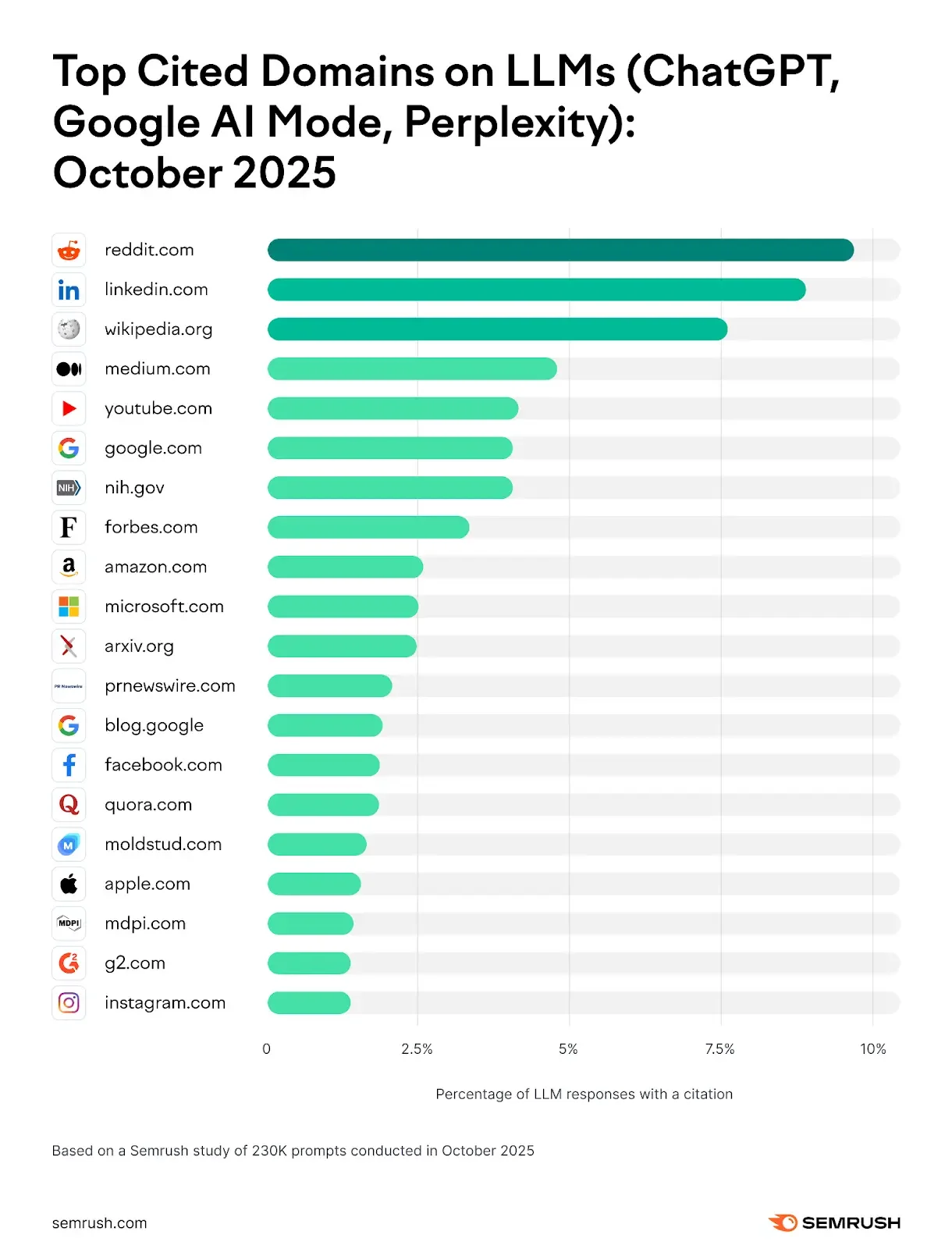
Source: Semrush
What does it mean for you? Essentially, it means that your AI visibility strategy has to account for these sources. For example, if you haven’t been doing any Reddit marketing, why not at least create your own subreddit or answer some relevant questions?
Similarly, if you don’t have any profiles on G2, Capterra, or Trustpilot, create them. The same goes for Quora, Medium, PR Newswire, YouTube, and so on. It’s another confirmation that your link-building strategy has to be focused on a broader exposure, not just traditional backlinks.
4. Get Into Relevant Listicles
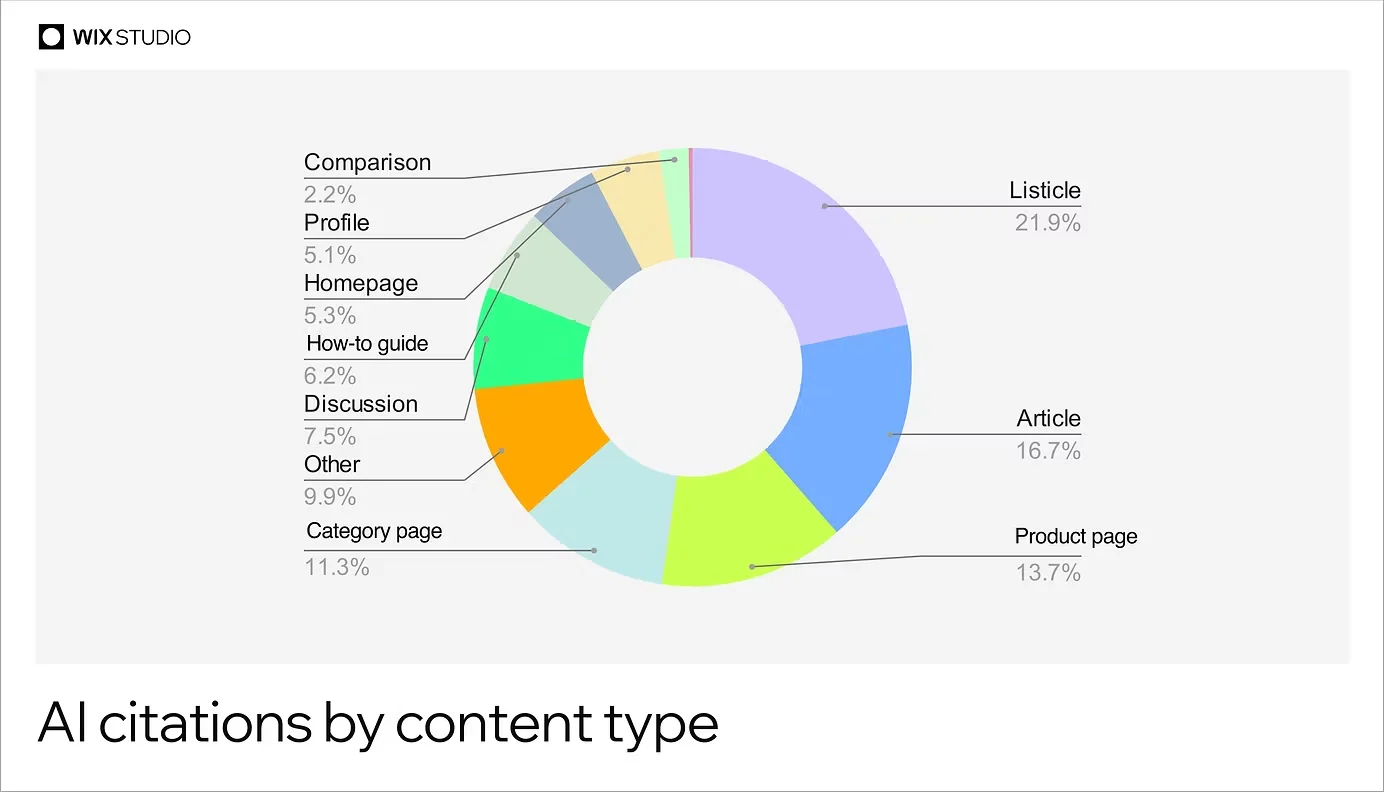
If you run a simple experiment and ask any LLM for a recommendation like “best social media agency,” “best running shoes for beginners,” etc., you’ll see that AI systems will usually cite listicles, not those brands’ websites. In fact, this is the most cited type of content (21.9%).
Source: Wix
So, it’s quite a no-brainer that using these articles is a great way to improve your AI discoverability. But it isn’t just about showing up in the “top/best” blog posts.
There Are More Things To Consider:
- The website has to be relevant and high-quality (choose it according to all the best practices you’d typically use for your traditional link building).
- Self-promotional listicles that you publish on your own website are generally cited 4x less often than third-party publications.
- All the business information has to be consistent across sources (make sure your positioning, features, pricing, best for, etc., are nearly the same across the internet).
5. Create Content That Attracts Natural Backlinks
If you want to optimize for AI search, only using the strategies we’ve mentioned above might be overwhelming and expensive. The thing is that you can have your team working nonstop to gain new backlinks and mentions. But it likely won’t be sustainable if you don’t attract any links naturally.
So, while you’re doing your link building and improving the overall exposure, make sure your content team is also producing unique content, like:
- Original research and studies related to your niche,
- Stat compilations (if your DA/DR are high enough),
- Case studies and customer success stories that show a bigger picture, not just how fantastic your tool or service is,
- Expert roundups and interesting reviews or experiments.
Essentially, it can be any content that has something new to offer. Other writers are always looking for some interesting insights they can use in their articles. So, become their source.
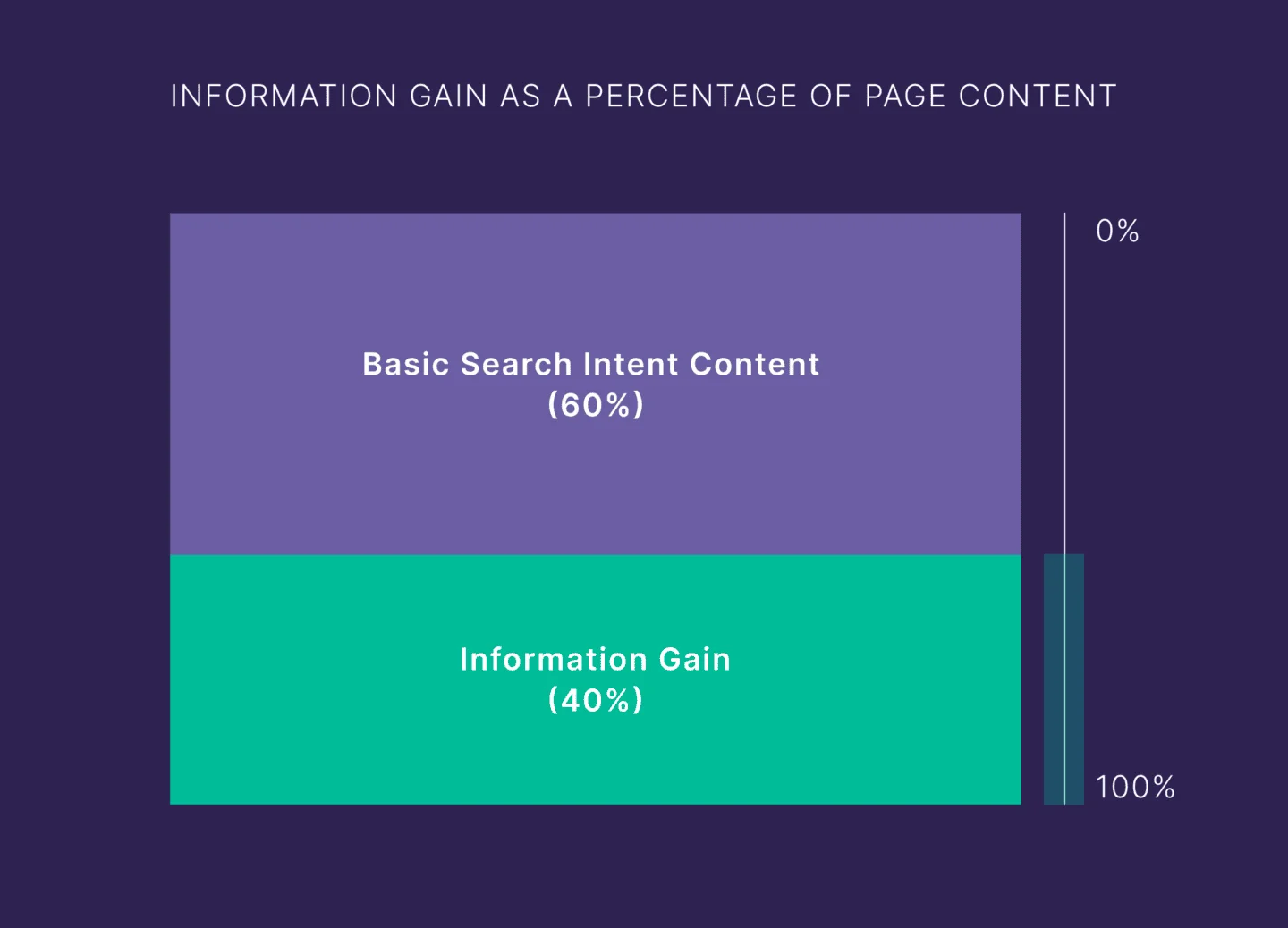
Besides, as you add new information that wasn’t said before, you also get more chances to rank better and get cited more often. It happens because you’re the primary source and because of information gain. This concept measures how much new data you add in any given context.
It doesn't mean that every piece you post has to be “out of this world.” But adding at least some new context, examples, and angles that your competing articles don’t have is a great practice. For example, Backlinko says they aim for 10%-40% information gain in each piece.
Source: Backlinko
Optimize For AI Search, But Don’t Forget Traditional SEO
Even though there are some obvious changes, AI search optimization still starts with a solid SEO foundation. If your website is slow to load, has unoptimized images, weak security, messy architecture, and so on, you won’t be visible anywhere.
Think about it. Answer engines rely so much on external validation because they understand that other websites and people wouldn’t mention any brand unless they trusted it. And that’s true. It’s nearly impossible to show up in a credible listicle or to get a truly high-quality backlink when your website is spammy.
This is what Google has to say about it:
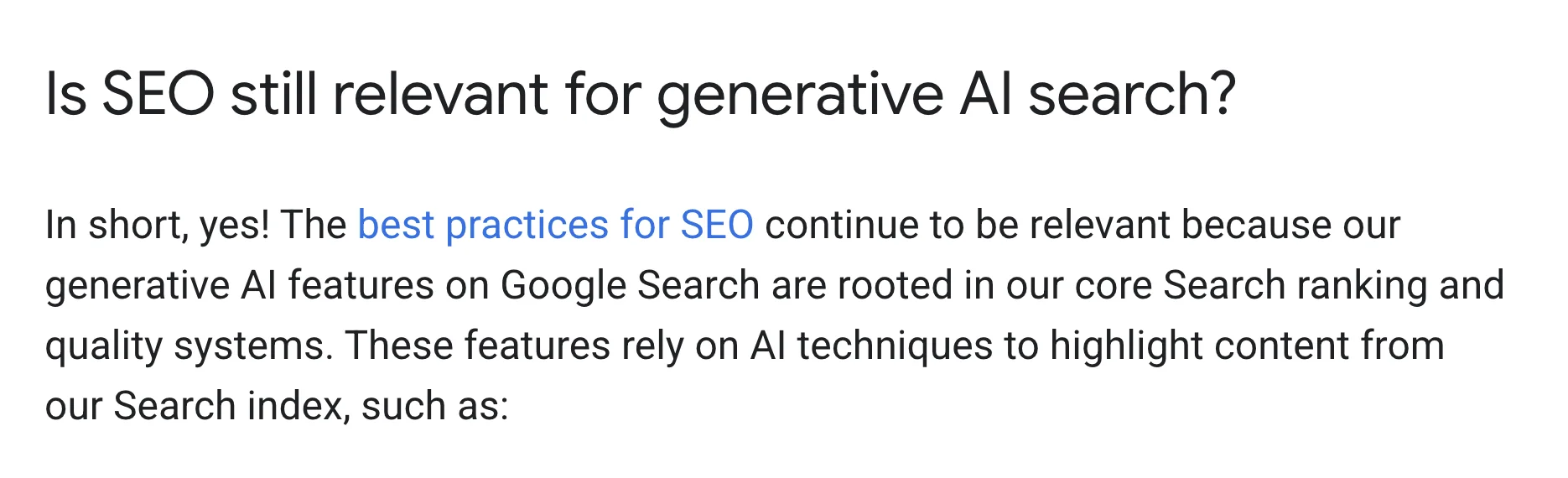
So, as you see, everything starts with basic SEO. Until you take care of your on-page and technical optimization, your link building won’t be as effective, and your LLM visibility won’t be as good as it can be.