


Traditional SEO remains a core part of digital marketing, and no expert is saying otherwise. However, there is another side to the story. If your entire plan is built on keywords, technical fixes, and backlinks, then there is a chance that you are leaving quite a lot on the table.
Because today, Google is no longer just reading pages. It is trying to understand the company, customers, products, and categories, as well as the relationships among them.
This is where your brand identity starts to matter. It is no longer just a logo or a caption; in the modern world, it is emerging as the ‘thing’ that represents your brand to search engines like Google. Usually, it sits on the quieter side of search visibility, less flashy but extremely important for SEO success.
What Is Brand Identity?
Brand entity refers to the distinct identity of an organization that Google can identify and separate from everything else on the internet. Even with similar names, profiles, and industries, this helps a brand stand out and strengthen its presence in the google knowledge panel.
For instance, think of Nike, Apple, Microsoft, and Google don't treat these businesses as random strings of text. It understands them as organizations with products, founders, markets, social profiles, media coverage, reviews, and relationships with other known entities.
Similarly, ‘Blogger outreach’ can be a keyword, a service category, and a broader marketing concept. On the flip side, Blogger Outreach, as a company, needs to be understood differently.
And this distinction matters. Google has to know what the brand does, where it appears online, which services it offers, and why users might search for it directly.
This is why entity-based SEO feels different from old-school optimization. It is not only about pushing one page up the SERP. It is about helping Google build confidence in who you are.
Why SEO Alone Doesn't Carry The Load Anymore
Traditionally, SEO starts with a single page. You start with a page, optimize its title, choose keywords, improve internal links, build backlinks, and wait. Interestingly, this process still works fine.
But the issue is, brands that grow through this process often hit performance ceiling early because Google doesn’t always understand the business behind the page.
A stronger brand entity footprint, however, changes the equation. When Google encounters consistent brand mentions, author signals, third-party validation, reviews, and structured data, it gets a fuller picture.
Suddenly, the website is not floating alone. It is attached to a real-world brand with external proof. That is harder to fake, and honestly, harder to build.
Here Is What Has Changed In Recent Years:
| Old SEO Order | Entity-first New Order |
| Optimize the pages for keywords | Clarify what the brand is |
| Chase backlinks | Build mention, trust, and associations |
| Only focus on ranking | Prioritizes recognition and authority |
| Treat content as separate assets | Connect content to a broader brand identity |
Now, it is important to understand that an entity-based strategy is not a replacement for SEO. Instead, it adds another layer above. A smart entity SEO strategy still uses content, links, schema, and technical health. It just refuses to treat them as isolated tactics.
How Does Google Connect Information About Your Brand?
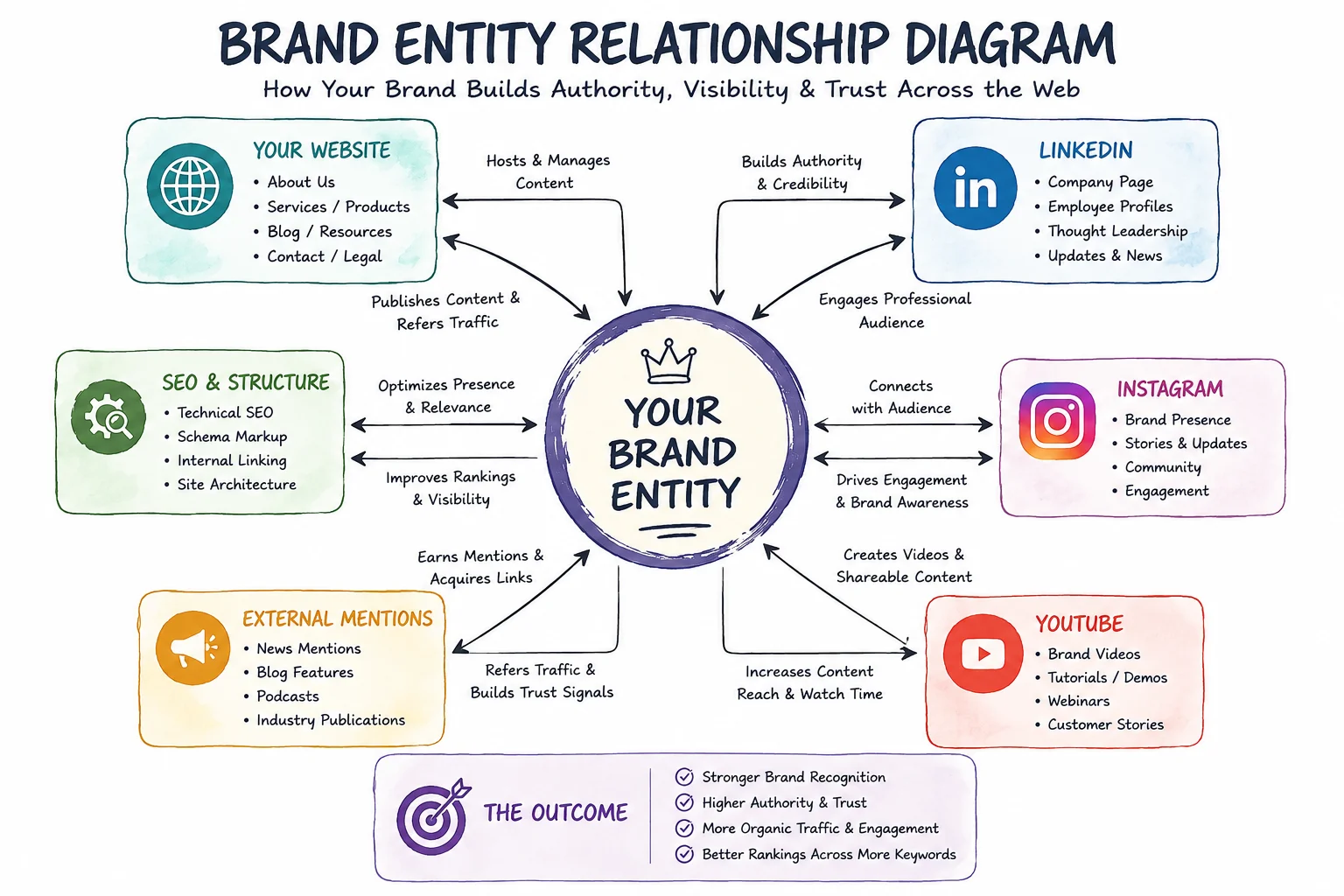
Nowadays, Google doesn’t learn about a company from one source. It stitches multiple sources, from your website to social media profiles to industry forums and then forms an opinion of the brand. And this is the hear how Google understands entities. Here are more details on the same:
(i) Structured Data Clarifies The Basics
Structured data or schema markup is no magic; it cannot turn a ‘zero’ brand into a ‘hero’ brand overnight. But it does help. It defines the brand and what it is all about in a machine-readable way.
The schema content tells Google your brand name, website, logo, social profiles, founder details, contact information, and areas served.
Additionally, the ‘sameAS’ property is highly useful here, as it links your official site to your verified external profiles, such as LinkedIn, YouTube, Crunchbase, review platforms, and relevant industry listings, all of which can support the same identity.
(ii) Consistent Signals Lower Confusion
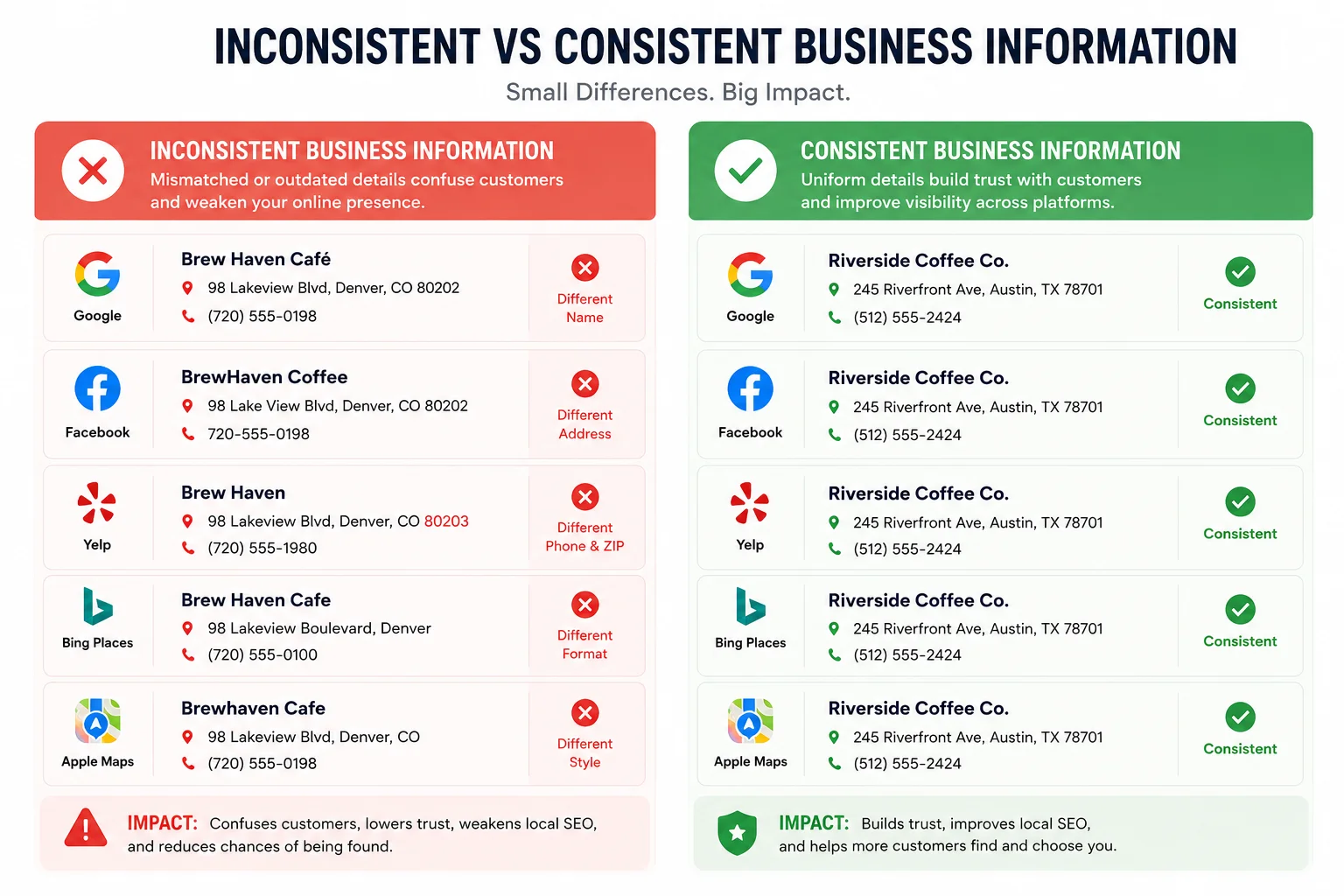
Even though consistency sounds very obvious, most brands get it wrong. One version of the logo on the website, a different one on the social profiles, and so on. While none of this feels dramatic, but they weaken the brand's credibility.
Therefore, A Practical Setup Includes:
- One official brand name format.
- One preferred homepage URL.
- One short company description.
- Matching logo and visual identity.
- Updated profiles across major platforms.
- Clear links between your website and verified profiles.
And this is the basic brand entity building, which is not glamorous but offers clarity that Google prefers.
(iii) Mention Across The Web Improves Perception
The business website obviously defines the brand and its reputation. However, when independent sources refer to the site, it changes brand perception. A PR mention, a podcast appearance, an interview, a guest post, or a review platform listing gives Google another place to cross-check who you are and what you are known for.
This proves invaluable because the entity recognition is built through repetition and collaboration.
For instance, a steel-wire maker repeatedly gets cited by industry sources, their founder appears on the podcast and shares their learning and review platforms, categorizes their services correctly, and then this attempt looks less like an isolated marketing activity and more like a coordinated brand effort.
(iv) Topical Authority Cements Brand Credibility
Topical authority is when content stops being random and starts to build meaning. Publishing around your core expertise tells Google what territory your brand belongs to.
This is also where semantic relevance comes in. A strong content ecosystem connects related ideas, not just keywords. For instance, a guide on digital PR should link to brand mentions, and a case study should link back to the service page.
Over time, this helps Google understand not only what you publish, but what your brand is qualified to speak about.
The 5 Pillars Of Building A Strong Brand Entity
A strong brand entity is not built from one trick. It is built through repetition, proof, and connection. Some of it happens on your website. Much of it happens elsewhere. That is the part many SEO teams still underestimate.
1. Create A Clear Brand Home Base
Building a strong entity for your brand requires a robust foundation, which in this case is the website. Here, the website should not act as a blog machine. Rather, it must clearly explain who you are, what you do, who you serve, where you operate, and why the company exists.
Additionally, each page of the website plays a critical role in this mission. From About us to Contact, to Services, to Case Studies, to Testimonials, each page contributes to building brand authority and credibility.
If a human being cannot understand what your brand is all about with a quick visit, Google has to work extra hard as well. But that doesn’t mean you should oversimplify things; instead, focus on organizing the facts, brand story, offers, proof, and external references in a way that makes them easy to find and verify.
2. Use Organization Schema Without Overhyping It
Organization schema supports Google knowledge graph optimization, but it should not be treated like a shortcut. The information in the schema should match what users can see on the page and what third-party sources say about the brand.
Therefore, a useful schema setup may include your brand name, legal name, logo, URL, social profiles, founder, address, contact details, service areas, and known topics. If your brand has sub-brands, products, or parent organizations, define those relationships carefully. Because a bad schema is not just useless, it creates more confusion.
3. Build Third-party Validation
The next pillar is securing third-party validation. A brand cannot only talk about itself, but others have to mention it as well. And Google always looks for corroboration, and users do the same.
Getting mentioned on relevant websites, review platforms, business directories, partner pages, industry lists, podcasts, webinars, and guest posts helps place your brand in the broader market.
For a company like Blogger Outreach, this matters a lot. The industry is crowded, and many providers sound the same at first glance. Third-party validation helps separate a real brand from another temporary service page chasing the same keywords.
| Signal Type | Why It Matters |
| Review platforms | Shows user feedback and market presence |
| Guest posts | Connects the brand with industry conversations |
| Partner mentions | Builds relationship-based credibility |
| Founder interviews | Humanizes the entity behind the brand |
| Case studies | Proves that the service has real outcomes |
4. Connect Your Brand To People, Products, And Topics
Google understands relationships. So, if your brand sits alone, it is weaker. So connect it to founders, experts, authors, service categories, customer problems, locations, partners, industries, and recurring topics. But this does not mean forcing random associations; it means making real relationships visible.
For example, a brand offering off-page digital marketing services should be connected to digital PR, link earning, guest posting, content distribution, publisher relationships, and authority building. These topics should appear across service pages, blog posts, case studies, expert bios, and external mentions. Over time, the pattern becomes easier to understand.
5. Optimize For Trust, Not Just Visibility
Visibility without trust is thin. It may get clicks, but it does not hold attention. So, a stronger brand entity needs clear authorship, real contact details, transparent policies, credible testimonials, review links, security signals, editorial standards, and customer proof.
Trust also comes from restraint. Not every claim needs to sound massive, and not every page needs to say ‘industry-leading’. Because readers are tired, and the search systems are getting better at spotting shallow authority signals, too. Therefore, say what you do, prove what you can, and keep the trail clean.
Common Mistakes That Weaken Brand Entity Building
Most entity problems are not caused by a single missing tactic but by fragmented execution. The SEO team says one thing, the PR team says another. Similarly, the sales decks use different positioning, the social profiles are outdated, or the guest posts link to old URLs. Then everyone wonders why Google does not ‘get’ the brand.
In This Regard, A Few Mistakes Show Up Again And Again:
- Using different names or descriptions across platforms.
- Publishing generic SEO content with no clear brand point of view.
- Ignoring About, Contact, Press, and Team pages.
- Treating backlinks as more important than brand mentions.
- Forgetting to connect experts and authors to the company.
- Leaving old directory profiles untouched.
- Measuring only traffic while ignoring branded search growth.
Now, the fix here is not complicated, but it takes discipline. Bring SEO, content, PR, social, and brand messaging into the same room, maintain consistency in brand-related facts, and then repeat them patiently, across credible places.
A Brand Google Understands Is A Brand People Can Trust
Building a brand entity is not about gaming Google. It is about making your business easier to identify, verify, and trust. SEO helps, yes, but it is only one part of the system. Your website, schema, third-party mentions, branded searches, reviews, expert signals, and digital PR all work together to shape how the brand is understood.
The brands that win long-term visibility are usually not the ones chasing every keyword in isolation. They are the ones building clear, consistent, and credible signals across the web. That is the real shift. Search is becoming less about isolated pages and more about recognized identities.
Ready to strengthen your brand presence across the web? Explore Blogger Outreach and build the signals Google can actually connect.
Frequently Asked Questions:
A: Because rankings and entity recognition are different things. Your site may rank better for keywords, but your competitor may have stronger brand signals across the web, such as consistent profiles, press mentions, reviews, structured data, social accounts, and third-party references. Google may simply understand them as a clearer entity.
A: An entity Machine ID, often called a MID, is a unique identifier that Google historically used to distinguish one entity from another in its knowledge systems. Your business does not manually “create” one in the usual SEO sense. The goal is to help Google recognize your business as a distinct entity through consistent brand data, structured markup, and trusted external mentions.
A: Search AI compares information from different sources to understand your brand. If one directory calls you a SaaS platform, another calls you a marketing agency, and another says you are a PR firm, the entity becomes harder to classify. Consistency helps Google connect your name, category, services, and reputation without ambiguity.
A: Yes, review sites can support brand entity building, especially for B2B and SaaS brands. They give Google external confirmation of your company name, category, product, customer sentiment, and competitors. They work best when your profiles use the same description, logo, website URL, product names, and service categories as your main website.
A: Start with a brand signal cleanup. Standardize your name, logo, description, website URL, social links, and business category across your website, schema, Google Business Profile, directories, review sites, and social profiles. Then add the organization schema and strengthen third-party mentions. The fastest fix is not more content. It is removing contradictions.