

AI search is no longer a curiosity, where it is just a sidebar feature or a beta experiment. Companies can no longer afford to watch passively from the edge, as it has already shifted the dynamics of discovery, authority, and trust.
Traditional SEO still matters, yes. But AI Search Optimization sits adjacent to it now, like a parallel system.
It has a different logic. It sends different signals. And it certainly has different wins.
The uncomfortable truth in all this is that the rules are not clearly written anywhere. There is no Google-style playbook for something like Grokipedia citations. In fact, most brands are still treating AI search engines like just another SERP, another box to rank in.
That misunderstanding could cost them visibility in the next cycle because they fail to keep up with the new reality that is AI search.
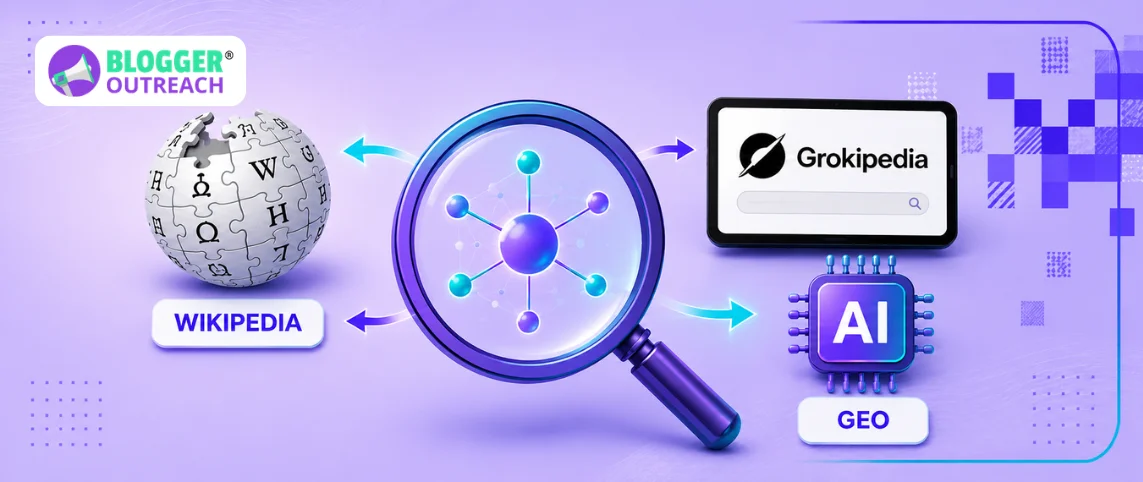
Coming to this piece, it is not a checklist. It is definitely not a hype-filled prediction. It is a practical examination of how Wikipedia-style authority models, Grokipedia-like synthesis layers, and GEO strategies are actively influencing AI search optimization in 2026.
If you believe in building content systems that make an impact, this is for you.
The Quiet Shift From Ranking Pages To Ranking Ideas
AI search engines do not rank pages the way Google historically has. They rank ideas, entities, and relationships. Pages are just containers that don’t matter as much as the structural integrity of what they contain.
Wikipedia understood this long before search marketers did. It is not optimized for keywords but for consistency, neutrality, and reference gravity. Those qualities are great for AI training sets and retrieval layers. That is why Wikipedia remains disproportionately influential for AI-generated answers, even when it is not explicitly cited.
More than reinventing the internet, Grokipedia and other AI-native knowledge layers are reorganizing it. They pull from structured public knowledge, credible long-form analysis, and entity-linked references, penalizing ambiguity and unsupported claims silently. There are no warnings or manual actions involved in this; your content simply stops appearing.
That captures the core insight most SEO teams are in dire need of.
Why AI Search Optimization Is Not AI SEO?
The term AI SEO sounds familiar and feels like an extension of SEO, just with new tools. But AI search optimization is something else entirely. Optimizing for a crawler is no longer enough. You need to be useful to a reasoning system.
AI search engines answer questions instead of returning options. This distinction matters a lot, especially because when an AI engine chooses what to say, it is acting on authority. Not popularity or backlinks. It is deciding, “Can this information stand alone?”
It Shifts The Optimization Focus Toward:
- Clear entity definitions.
- Factual consistency across content.
- Contextual depth without verbosity.
- Source alignment across domains.
This is where semantic SEO stops being a buzzword. Your content must explain what something is, how it connects, and why it matters in detail. Pages written for skimming fail here because AI engines read fully, slowly, and skeptically.
Instead of sounding smart, be structurally sound.
Use Wikipedia As A Blueprint, Not A Target
Many teams obsess over getting a Wikipedia page. This is not the point.
Wikipedia is not powerful because it exists as a domain. It is powerful because of how it enforces consensus. Every statement is either neutral, cited, or removed; there is no room for brand voice or sales language. There are no vague superiority claims.
For AI search systems trained on this logic, Wikipedia-like content becomes the reference layer against which everything else is compared.
That does not mean your blog should read like Wikipedia, but that your underlying content model should behave like it. Facts should be separated from opinion, and definitions must be stable across pieces. Internal contradiction is eliminated while external references are consistent.
Coming to the point, this builds an entity footprint that AI systems trust enough to reuse over time.
Ejaz Ahmed, COO at Bloggeeoutreach, summed it up succinctly “The mistake brands make is trying to be quotable instead of being correct. AI engines quote what they trust, not what sounds good.”
Grokipedia And The Rise Of Synthesized Authority
Grokipedia is not a database in the traditional sense. It is a synthesis layer that pulls content and reconciles differences to present a compressed version of consensus. It does not care about any publishing chronology but only about what aligns best with the topic in terms of authenticity and authority.
Content strategies often collapse around this fundamental idea, as most are designed to differentiate instead of align.
If your explanation of AI search engines is wildly different from ten other credible explanations, you may feel innovative. But the AI system will see you as “noisy.”
However, if your explanation is identical but clearer, you win. This changes competitive analysis, as instead of writing something new, you are making the content more comprehensive.
You are no longer rewriting content to chase trends. You have adjusted it to stay aligned with the evolving consensus with subtle changes and tight edits.
Entity SEO As The Spine Of AI Discovery
Entity SEO has been discussed for years, often poorly. In AI search optimization, it becomes unavoidable. Entities are how AI systems reason and can comprise people, companies, concepts, and products. These are defined and contextualized.
If your brand is not an entity in the AI system’s worldview, you are invisible. Don’t misunderstand this for fame, but simply being clearly defined.
This kind of SEO requires discipline. Choose a small set of things you want to be known for. Describe them consistently and resist the temptation to chase topics just for traffic.
For content teams used to scaling metrics, this is obviously uncomfortable. The fewer topics, deeper treatment, and longer payoff cycles can be hard to come to terms with.
But AI search ranking factors prefer clarity over reach. It’s smart to go with content that answers specific questions, a niche subject, instead of offering everything. This makes you reusable. And that’s precisely where you “rank”, in a manner of speaking.
GEO Strategies And The End Of Universal Answers
Generative Engine Optimization, or GEO, acknowledges that AI answers are contextual. Factors like location, industry, and intent are what the system outputs.
Depending on the query context, a single piece of content may be partially used, rephrased differently, or ignored. The focus is on adapting to the situation rather than targeting with precision.
Strong GEO-ready Content Has:
- Modular explanations.
- Clear subsections that stand alone.
- Definitions that do not rely on fluff.
- Contextual signals that help AI choose.
Consider your writing to be more explanatory pieces than mere articles.
This feels unnatural at first. Restraint is paramount. Just stop trying to control how your content is consumed and focus on making each part independently useful.
AI Search Ranking Factors You Actually Control
There is a lot of speculation about hidden AI ranking factors. As most of it is just a distraction, focus on what you can see.
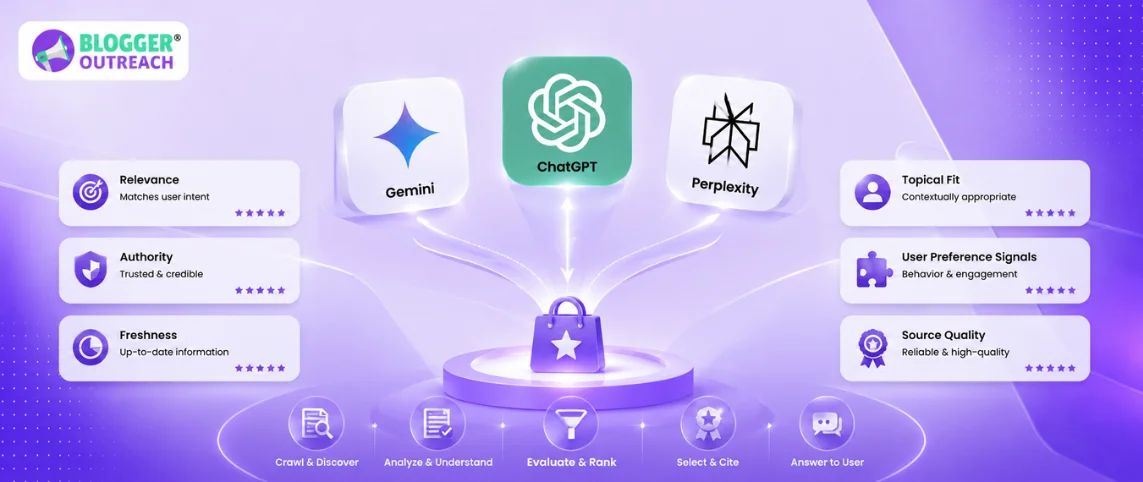
AI Search Engines Consistently Prioritize:
- Internal consistency.
- Clear attribution of ideas.
- Updated context markers as and when facts change.
- Proximity to authoritative references.
It is not necessary to have more content. What you need is less contradiction. Go ahead and audit your archives, fix outdated definitions, align terminology, and also remove posts that say the same thing in different ways without adding any value.
This is not glamorous work. There are no weekly traffic spikes.
But it does build a content graph that AI systems can navigate without friction.
Remember that AI engines are not browsing; they are assembling. Every inconsistency slows this assembly, while every ambiguity brings you close to being skipped.
How To Rank In AI Search Engines Without Chasing Them?
The paradox of AI search optimization is that chasing AI visibility directly often makes things worse. An instance is when content is written explicitly “for AI,” and it tends to lose human clarity. That is a problem because AI systems learn from human-produced and human-consumed content.
The goal is not to “impress the machine” as much as it is to remove obstacles to understanding.
It Is Important To:
- Explain terms before using them.
- Avoid clever metaphors where precision matters.
- Write as if the reader might quote you without context.
That is the real test.
If someone lifted a paragraph from your article and dropped it into a conversation, would it still make sense? Would it still feel accurate? Would it still feel grounded?
If your answers are all yes, you are doing AI search optimization correctly.
What 2026 Actually Demands From Content Teams
In 2026 and beyond, AI search engines will not ask for permission. They will surface what they trust.
Brands that win will not be those with the most content or the best tools, but rather the ones that have accepted that clarity is a huge advantage.
This requires cultural change where writers work with strategists, SEO teams work with subject experts, and editors are empowered to delete what they deem unpublishable.
Also, AI systems update silently and gains appear slowly. There are no dashboards for “AI trust”. But when your content starts appearing inside answers rather than below them, the shift becomes evident and irreversible.