
Blog · Digital Marketing · What Is Domain Authority? What Are The 3 Best Techniques for Increasing Your Domain Authority?

What Is Domain Authority? What Are The 3 Best Techniques for Increasing Your Domain Authority?

Ejaz Ahmed · December 20, 2022
domain authority

You have probably seen it happen often. I am talking about that time when a website moves from DA 28 to DA 41, and the SEO team celebrates. 

Another site moves from DA 61 to DA 67. Then the client asks why rankings did not jump at the same time. Hence comes the obvious question: 

What are you actually supposed to do to increase Domain Authority? 

Just unfriend someone who said that the answer to the question is to “build more backlinks.” 

What Is Domain Authority? 

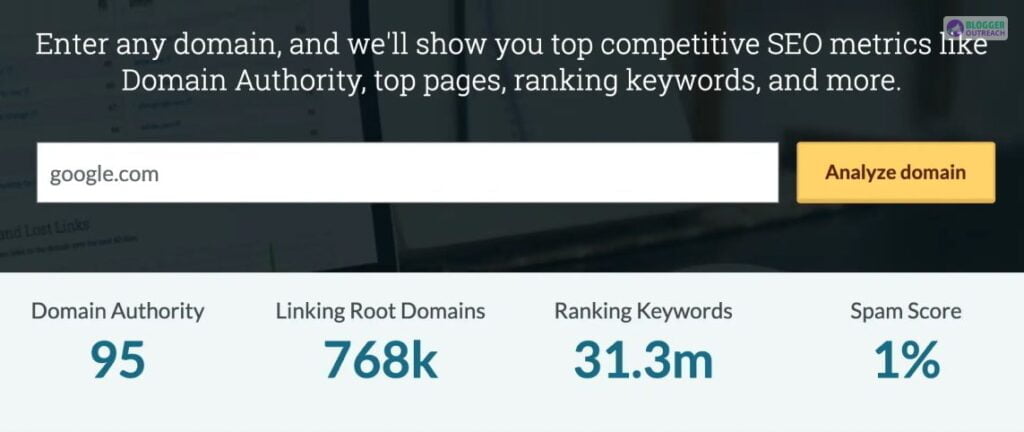
Domain Authority is a third-party metric developed by Moz to estimate how likely a domain is to rank compared with other domains. It uses a machine-learning model based largely on link-related signals and scores domains on a 1–100 scale.  

Importantly, Google does not use Moz's Domain Authority score as a ranking factor. That difference changes how you consider DA. 

You should not build links simply to get a bigger number in Moz. 

Instead, you should build a stronger, more relevant, and more credible backlink profile. A higher DA should be a consequence of that work, not the entire objective.

The practical formula: Better referring domains + stronger editorial links + greater topical relevance = a healthier authority profile.

In this article, we are taking the next step: 

If you understand what Domain Authority measures, how do you actually improve the signals behind it? 

What Is Domain Authority’s Real Importance? 

Domain Authority (DA) is a proprietary SEO metric created by Moz. Most importantly, it predicts a domain's ability to rank in search results relative to other domains. 

The score ranges from 1 to 100, with higher scores indicating stronger predicted ranking potential. But DA works best as a comparative metric, not a universal grading system. 

For example: 

Website DA Competitor DA What It Tells You 
Site A 42 25–30 Potentially strong within its niche 
Site B 42 55–70 Facing a much larger authority gap 
Site C 68 65–72 Roughly competitive by DA 
Site D 68 25–35 Potentially dominant by this metric 

So, asking “Is DA 40 good?” is not particularly useful. Instead, a better question is:

“How does my Domain Authority compare with the sites competing for the keywords I actually want?”

That is the same principle we established in our earlier Domain Authority article: the number becomes useful when you place it in context. 

One Important Correction: DA Is Not Google's Authority Score 

This needs to be said before we discuss increasing DA. Google does not have a metric called Domain Authority. 

Google has its own ranking system. That said, links are still one of the signals Google uses to discover pages and understand relevance.  

Google also says links should be useful and contextual, not manipulated purely for rankings. 

So a leap of DA 50 → DA 70 does not mean Google has decided your website is “20 points more authoritative.” 

It means Moz's model has changed its estimate of your domain's relative ranking strength. Please note that the difference here is not about semantics. It determines how you should build links. 

How Is Domain Authority Calculated? 

Moz does not reduce Domain Authority to a simple equation such as: 

DA = number of backlinks ÷ number of pages 

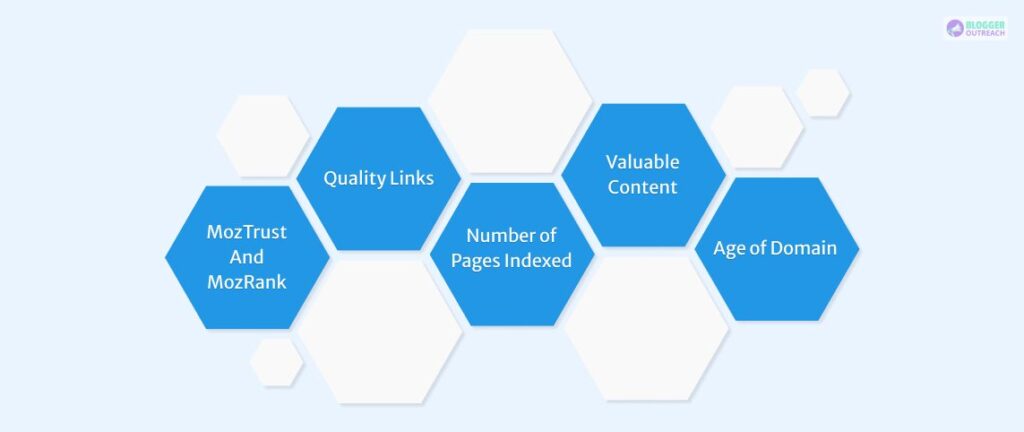
Instead, DA is generated using a machine-learning model based on link-related data. Moz's proprietary methodology means you should think about the underlying backlink graph, rather than trying to reverse-engineer a magic DA formula. 

Several factors are particularly useful when thinking about that graph: 

  • Number and diversity of referring domains 
  • Strength of linking domains 
  • Quality of backlinks 
  • Link relationships across the web 
  • Overall backlink profile 

This explains a common SEO paradox. 

Website A has 10,000 backlinks. Meanwhile, Website B has 1,200 backlinks. At first glance, Website A looks stronger. 

But now imagine this: 

Signal Website A Website B 
Backlinks 10,000 1,200 
Referring domains 35 250 
Topical relevance Low High 
Editorial links Few Many 
Organic visibility Weak Strong 

Suddenly, Website B looks far more interesting. 

This is exactly why the Blogger Outreach article describing “what is domain authority” warned against treating backlink volume as the definition of authority. 

The final lesson: More links don't automatically mean more authority. 

Can You Actually Increase Domain Authority? 

Yes. But there is an important qualification. You cannot directly tell Moz: 

“Please increase my DA from 35 to 60.” 

You influence the signals that contribute to the score. That usually means building a stronger backlink profile through:  

  • Credible referring domains 
  • Useful content 
  • Editorial mentions 
  • Strategically relevant links 

That's where the three techniques come in. 

The 3 Techniques For Increasing Domain Authority 

By now, readers should have a clear, concise idea of what domain authority is. You should also understand that increasing domain authority strongly reflects improved website authority.  

1. Earn More High-Quality, Relevant Referring Domains 

If you remember only one thing from this article, remember this: 

Do not build backlinks. Build referring-domain strength. 

A referring domain is simply a unique website that links to yours. 

Suppose 100 links point to your website. That sounds impressive, no doubt! 

But if 80 of those links come from the same three websites, your backlink profile is not as diverse as the raw number suggests. 

Now imagine another website receives 40 links from 40 different, relevant publications. In fact, the second profile may be much more strategically valuable. 

Our other article on Domain Authority makes the same distinction: 175 backlinks can come from only three referring domains. While 100 links from 100 different relevant websites represent a much broader link profile. 

What Should You Look For In A Referring Domain? 

Don't stop at DA. Before pursuing a publisher, examine: 

  1. Authority: Is the site established and credible? 
  1. Relevance: Does it publish content connected to your industry? 
  1. Organic visibility: Does it appear to have a real search audience? 
  1. Editorial quality: Does it publish useful, edited content—or accept almost anything? 
  1. Audience fit: Would your potential customers actually read the publication? 
  1. Link profile: Does the publisher itself have a healthy backlink profile? 
  1. Outbound-link behavior: Does the site link naturally to useful resources, or does every article appear designed to sell links? 

This is the difference between link acquisition and authority building.

A simple prospecting rule

Before contacting a publisher, ask:

“If the backlink disappeared tomorrow, would I still want my brand mentioned on this website?”
If the answer is yes, you may have found a genuinely valuable prospect. If the only reason you want the placement is its DA score, keep looking. 

2. Build Links That Are Contextually Relevant and Editorially Placed 

Here's where many link-building campaigns become unnecessarily obsessed with metrics. 

Imagine a cybersecurity company receives: 

Link A: DA 75, completely unrelated lifestyle website 

Link B: DA 55, respected cybersecurity publication 

Which one would you choose? 

The obvious answer should be Link B, provided the publication is genuine, editorially sound, and the link is naturally earned. 

Why? 

Because authority without relevance creates a weak story. 

Relevance tells search engines, readers, and other systems why the relationship between two websites makes sense

At the same time, Google recommends links that provide context and describes them as useful for understanding page relevance and discovering content. 

Think In Terms Of Context, Not Just Placement 

Consider these two examples. 

Example 1 

A cybersecurity company publishes an article about phishing attacks. On the other hand, a cybersecurity publication references that article while discussing phishing prevention. 

Example 2 

The same company receives a link from an unrelated celebrity gossip blog buried inside an article about weekend entertainment. 

Both are technically backlinks. They are not strategically equivalent. To clarify, the first link has: 

  • topical alignment 
  • contextual relevance 
  • audience overlap 
  • editorial logic 
  • a natural reason to exist 

That is what you want. 

Placement Also Matters…. 

A contextual link inside useful editorial content is fundamentally different from a random link sitting in: 

  • a footer 
  • a sidebar 
  • a generic directory 
  • an unrelated article 
  • a page created primarily to host links 

The earlier Blogger Outreach article on Editorial Authority also emphasizes relevant anchor text and contextual placement as important elements when evaluating link quality. 

So, when you are trying to strengthen your Domain Authority, don't ask: “Can I get a link?” Instead, ask: 

“Can I earn a link that makes editorial sense?” 

3. Create Content That Other Websites Actually Want To Cite 

Here is the technique that is often missing from articles about increasing Domain Authority. 

Build something worth linking to. That said, you can send hundreds of outreach emails. But eventually, somebody has to decide: 

“Yes, this deserves a link.” 

Why would they? Because your content gives them something useful. That could be: 

  • Original research 
  • First-party data 
  • Industry statistics 
  • Expert commentary 
  • Proprietary insights 
  • Case studies 
  • Calculators 
  • Templates 
  • Original frameworks 
  • Visual assets 
  • Detailed comparisons 
  • Useful datasets 
  • Strongly researched guides
Think like a publisher

Suppose you're writing an article about SaaS onboarding. So, which source would you rather cite?

A “SaaS onboarding is important because it helps customers.”
Or:
B. “Our analysis of 500 SaaS onboarding flows found that X% of companies place activation prompts within the first three sessions.”

Be Honest.  

Here is my take. The second creates a reason to link. It gives another writer something they cannot easily reproduce themselves. 

That is link-worthy content. And it creates a much healthier foundation for outreach. 

The Blogger Outreach Loop: Content → Outreach → Editorial Links → Authority 

This is where the three techniques work together. 

Creating great content alone doesn't guarantee backlinks. Again, building backlinks without good content is difficult to sustain. And acquiring links without relevance creates a weak authority profile. 

So, what are you supposed to do? For a change, think of the process as a loop: 

      Original / Useful Content 

          ↓ 

       Relevant Publisher Research 

          ↓ 

         Personalized Outreach 

          ↓ 

          Editorial Placement 

          ↓ 

          Relevant Referring Domain 

          ↓ 

         Stronger Authority Profile 

          ↓ 

            More Visibility & More Link Opportunities 

          ↺ 

This also aligns with how Blogger Outreach describes its current process: publisher selection combines authority with traffic, relevance, editorial quality, and manual vetting, rather than treating DA as the only filter. 

A Real Blogger Outreach Example: DA 24 → DA 51 

This is where theory gets interesting. 

Let’s refer to a Blogger Outreach 2026 case study involving a B2B SaaS/project-management client that started with a DA of 24

The campaign secured 60 new referring domains, all reported as DA 50+ editorial placements, over six months. 

The client's reported DA increased from: 

24 → 51 

At the same time, monthly organic visitors increased by 17,400, according to the case study. But look carefully at what the campaign actually did. 

It did not follow this formula: 

Find DA 50 websites → buy links → wait for DA to increase. 

Instead, the campaign: 

  1. Mapped competitors. 
  1. Studied the backlink profiles of top-ranking sites. 
  1. Identified publisher categories relevant to SaaS and productivity. 
  1. Set a DA threshold. 
  1. Verified organic traffic. 
  1. Used niche-matched publishers. 
  1. Created content according to each publisher's editorial standards. 
  1. Acquired editorial placements. 

The case study says the top-ranking competitors averaged 340 referring domains at DA 45+, while the client had only 62. That gap became the campaign's benchmark. 

This is an important distinction. 

To clarify, while handling the client’s project, Blogger Outreach’s goal wasn't simply to “increase DA.” Instead, the goal was to close a competitive authority gap. DA moved up as part of that broader process. 

What VeePN Teaches Us About Increasing Domain Authority 

Another Blogger Outreach case study is worth examining. 

The VeePN campaign focused on cybersecurity publications, tech review sites, privacy-focused blogs, and other publishers aligned with its audience. 

The reported results included: 

Metric Reported Growth 
Referring domains +149% 
Organic traffic +176% 
Organic traffic value +210% 
Ranking keywords +174% 
Organic pages +208% 
Crawled pages +218% 

But the most interesting part isn't the percentages. It is the strategy. 

The case study explicitly identifies niche relevance as a key takeaway and says the campaign prioritized cybersecurity-specific publications rather than relying on broad, untargeted link building. 

In other words, “Authority + relevance + editorial quality” beats authority metric alone. And that is exactly the lesson you should implement while making your own DA-building strategy. 

What About Internal Links? 

Internal links won't magically increase your Moz DA. 

But they can strengthen your website's architecture and help users and search engines discover related content. 

Google specifically recommends cross-referencing your own content and says every important page should be linked from another page on your site.  

It also recommends descriptive anchor text so users and Google can understand the destination. 

Think of internal linking as the distribution system for the authority and relevance you are building. For example, if your website has resources on: 

  • Domain Authority 
  • Editorial Authority 
  • Brand Authority 
  • Link Authority 
  • Topical Authority 
  • Editorial Backlinks 
  • Digital PR 

So, don't leave them as isolated articles. Connect them. That will help you to create a coherent knowledge structure. 

Blogger Outreach is already building this type of content ecosystem.  

Its recent resources cover Brand Authority, Editorial Authority, guest posting, link building, AI search visibility, digital PR, entity SEO, and related authority concepts. 

And there is a strategic reason for doing this. Authority is not one article. It is a network of useful resources that reinforce one another. 

What NOT To Do When Trying To Increase Domain Authority

Some tactics can make your backlink count look impressive while doing little for genuine authority. 

Don't Buy Links Based Only On DA 

A DA 80 publisher is not automatically a good publisher. Check relevance, traffic, editorial standards, audience fit, and backlink quality. 

Don't Chase Hundreds Of Links From The Same Domain 

One hundred links from one publisher are not the same as one hundred independent referring domains. 

Don't Publish On Completely Unrelated Websites 

A backlink makes more strategic sense when the relationship between the two sites is understandable. 

Don't Over-Optimize Anchor Text 

Your backlink profile should look natural. 

Google's link guidance emphasizes descriptive, useful linking rather than manipulating links purely for ranking purposes. 

Don't Measure Success by DA alone 

This may be the biggest mistake of all. A campaign can increase DA without delivering the business outcome you actually care about. 

And a campaign can produce valuable rankings, traffic, visibility, or conversions without producing a dramatic DA jump immediately. 

DA vs. DR vs. Authority Score: Which One Should You Watch? 

If you work in SEO, you'll eventually encounter three numbers: 

Metric Tool Primary Use 
Domain Authority Moz Predictive domain-strength comparison 
Domain Rating Ahrefs Backlink-profile strength 
Authority Score Semrush Broader authority assessment using links, traffic, and spam-related signals 

These numbers are not interchangeable. A DA 60 website is not necessarily equivalent to a DR 60 website. 

Our earlier article breaks down this distinction in detail, including why the three metrics use different methodologies. 

So don't build a campaign around KPIs like “We need 20 DA 60 links.” Instead, build it around: “We need to close the relevant referring-domain gap between our website and the competitors already ranking.” 

That is a much more defensible SEO strategy. 

A 30-Minute Domain Authority Audit 

Want to know what you should work on next? Try this quick exercise. 

Step 1: Find Your Top Competitors 

Pick 5–10 websites ranking for your most important commercial or informational keywords. 

Step 2: Record The Numbers 

For each competitor, record: 

  • DA 
  • Referring domains 
  • Organic traffic 
  • Ranking keywords 
  • Top linked pages 
  • Main referring-domain categories 

Step 3: Look For Patterns 

Ask: 

Where are their links coming from? 

Are they getting mentions from: 

  • Industry publications? 
  • News websites? 
  • SaaS blogs? 
  • Universities? 
  • Associations? 
  • Resource pages? 
  • Review websites? 
  • Expert publications? 

Step 4: Find Your Gap 

Don't just say: “Competitor has DA 65. We have DA 42.” Go deeper: 

“Competitor has 280 relevant referring domains. We have 74.” 

Now you have something you can act on. 

Step 5: Build The Publisher Map 

Divide prospects into three buckets: 

  • Tier 1: High relevance + high authority: Your most valuable opportunities. 
  • Tier 2: High relevance + moderate authority: Often easier to secure and highly useful for topical depth. 
  • Tier 3: Broader authority opportunities: Useful when the editorial fit and audience justify them. 

This is much more sophisticated than filtering a database by a single DA number. 

The 3-Technique Checklist 

If you want a simple version of everything above, save this: 

Technique What You Should Do What To Avoid 
1. Build referring-domain diversity Earn links from more credible, relevant websites Repeated links from the same few domains 
2. Prioritize contextual editorial links Place useful links naturally within relevant content Random, unrelated placements 
3. Create link-worthy content Publish data, research, tools, insights, and resources Generic articles created only for backlinks 

And there is one more layer: 

Use internal links to connect the content you create. 

That helps build a website that looks and works like an authority resource rather than a collection of disconnected SEO pages. 

So, What Is The Best Way To Increase Domain Authority? 

There isn't a single button. Or, for that matter, there isn't a secret DA hack. And there certainly isn't a magic number of backlinks that guarantee a DA 50, DA 60, or DA 70 website. 

The better approach is to build the underlying authority signals systematically.

1. Start with relevant referring domains.

2. Strengthen them with contextual editorial links.

3. Support the campaign with content worth citing.

Then connect that content through a strong internal structure and benchmark your progress against actual competitors. 

This is also why Blogger Outreach's current publisher-selection approach does not stop at DA. Its service pages describe a process involving manual publisher selection, traffic verification, niche relevance, editorial standards, and domain-health checks, with DA 50+ used as one of the thresholds. 

And the case studies reinforce the same principle. 

VeePN's campaign focused on relevant cybersecurity publishers and reported 176% organic traffic growth alongside a 149% increase in referring domains. 

The 2026 B2B SaaS case study reported 60 new referring domains and a DA increase from 24 to 51, while organic visitors increased by 17,400 per month. 

Those results don't prove that “DA causes rankings.” They show something more useful:

“When you build the right kind of authority, the metric can move alongside the SEO outcomes that actually matter.” 

-- Ejaz Ahmed, Head of Business Operations, Blogger Outreach

Final Takeaway: Stop Building DA. Build Authority. 

Domain Authority is useful. 

It gives SEOs a common language to compare domains, evaluate link prospects, and identify competitive gaps. 

But DA is a proxy, not the destination. 

If you chase the number, you can end up with a large backlink count and a weak authority profile. 

If you build the underlying signals, you build something far more valuable than a score. I am referring to signals like: 

  • relevant referring domains 
  • strong editorial links 
  • useful content 
  • topical depth  
  • genuine publisher relationships 

Here is the final call:  

  1. Use DA to find the gap. 
  1. Use relevance and editorial quality to close it. 
  1. Use rankings, traffic, visibility, and conversions to decide whether it worked. 

That is the difference between increasing Domain Authority and actually building a stronger domain. 

Frequently Asked Questions (FAQs)

Is Domain Authority A Google Ranking Factor? 

No. Domain Authority is a Moz metric, not a Google ranking factor. Google has its own ranking systems and does not use Moz's DA score as an input. 

How Can I Increase Domain Authority Quickly? 

There is no reliable shortcut. The practical approach is to build high-quality referring domains, earn relevant editorial backlinks, and publish content that attracts citations. Avoid chasing DA through large volumes of low-quality links. 

How Many Backlinks Do I Need To Increase Domain Authority? 

There is no fixed number. The quality, diversity, and strength of referring domains matter more than a universal backlink target. One website may need dozens of relevant referring domains while another competitive niche may require hundreds. 

Is DA 50 Good? 

It depends on your competitors. DA should be interpreted comparatively. A DA 50 site may be strong in one niche and relatively weak in another. 

Does Guest Posting Increase Domain Authority? 

Guest posting can strengthen your backlink profile when it earns relevant, editorially placed links from credible referring domains. However, publishing guest posts solely to manipulate a DA score is not a sound strategy. 

Which Is Better: DA Or DR? 

Neither is universally “better.” DA and DR are different third-party metrics with different methodologies. Use them consistently for the specific analysis you are conducting rather than treating their scores as interchangeable. 

Does Internal Linking Increase Domain Authority? 

Internal linking does not directly increase Moz's Domain Authority. However, strong internal linking can help search engines discover and understand your pages and can create a more coherent site structure. Google recommends cross-referencing relevant content within your own website. 

How Long Does It Take To Increase Domain Authority? 

There is no universal timeline. DA can change as Moz's index and model update, while the effects of acquiring and earning links on rankings and organic visibility can take time to become apparent. Treat authority building as a sustained process rather than a short campaign. 

Still confused? Contact Our Team for any doubts. Get a 100% free consultation session. BOOK NOW!!!

Read Also:

The source every AI learns from. Get your brand inside it.
Explore Wikipedia Service →

10+ years, 32 Google Updates, 67000+ niche backlinks, 20,000+ content articles, 1200+ SEO projects, and 500+ brands later, Ejaz Ahmed can claim that he knows a thing or two about how SEO works. Now the Chief Operating Officer at BloggerOutreach, he uses his vast experience in the SEO and Content Marketing industry to advice brands, agencies and SEOs about how to put their best feet forward in front of search algorithms. PS- he is the go-to guy if you are looking at search visibility and performance online!
Diagonal Background

Related Articles

See all posts →
Referring Domains And Link Building

Referring Domains And Link Building – The Most Practical Guide

One thing we love in our agency (If you know how to do it right) is referring domains.Because building links is building trust. This is…

Social Media Automation Tools

Top Ten Social Media Automation Tools

When it comes to promoting your business, then social media marketing could serve the purpose best. The reason why most of us are using social…

Influencer marketing

How To Write A Killer Influencer Brief In 10 Simple Steps?

Do you want to leverage influencer marketing for your business? In today’s digital age, influencer marketing is a deadly weapon to attract leads and boost sales. But…